
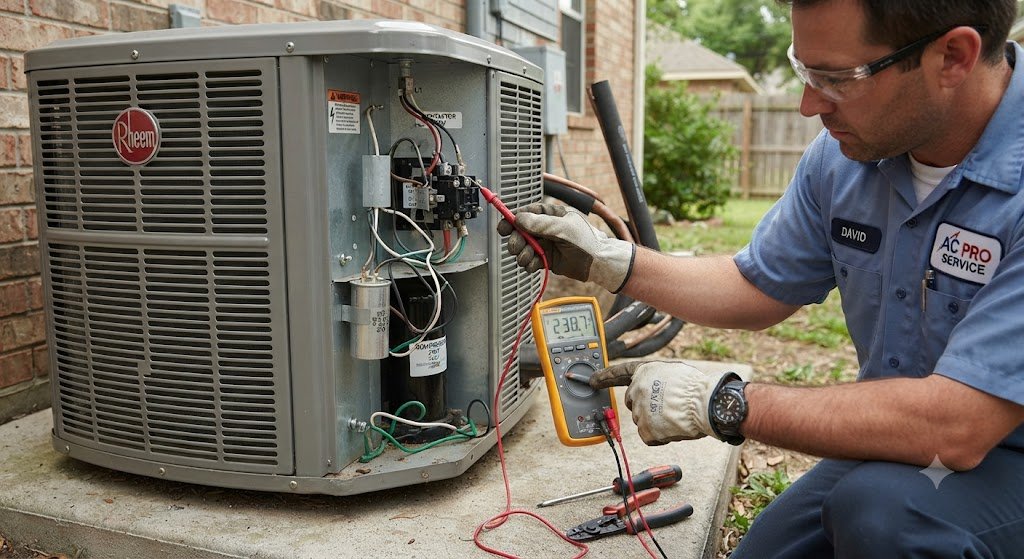
Air conditioning voltage is one of the most important yet misunderstood aspects of installing, operating, and maintaining an air conditioner. Whether you’re buying a window AC, installing a central HVAC system, or troubleshooting electrical issues, understanding voltage helps you avoid expensive mistakes, improve efficiency, and extend the lifespan of your equipment.
Many homeowners focus on BTUs, SEER ratings, or cooling capacity but overlook the electrical requirements that actually power the system. Choosing the wrong circuit, using undersized wiring, or connecting an air conditioner to an incorrect voltage source can lead to poor performance, frequent breaker trips, compressor damage, and even fire hazards.
This guide explains everything you need to know—from common voltage ratings and electrical terminology to wiring requirements, troubleshooting techniques, and expert recommendations for residential and commercial systems.
What Is Air Conditioning Voltage?
Air conditioning voltage refers to the electrical potential supplied to an air conditioner so it can operate correctly. Voltage determines how electrical energy is delivered from your home’s electrical panel to the AC unit.
Think of voltage as water pressure in a pipe:
- Voltage = Electrical pressure
- Current (Amps) = Amount of electricity flowing
- Power (Watts) = Total energy consumed
An air conditioner is designed to operate within a specific voltage range. Supplying too little or too much voltage reduces efficiency and may permanently damage sensitive electrical components.
Why Voltage Matters in Air Conditioning Systems
Voltage directly affects nearly every electrical component inside an air conditioner.
Proper voltage helps:
- Protect the compressor
- Improve cooling performance
- Reduce electrical losses
- Increase equipment lifespan
- Prevent overheating
- Lower maintenance costs
Incorrect voltage can cause:
- Compressor failure
- Capacitor damage
- Motor overheating
- Frequent breaker trips
- Poor cooling
- Higher electricity bills
This is why HVAC manufacturers specify an acceptable operating voltage on every unit’s data plate.
Standard Air Conditioning Voltage Around the World
Voltage standards vary depending on the country and the type of air conditioner.
| AC Type | Typical Voltage |
|---|---|
| Portable AC | 110–120V |
| Window AC (small) | 110–120V |
| Window AC (large) | 220–240V |
| Split AC | 220–240V |
| Central Air Conditioner | 208–240V |
| Commercial HVAC | 208V, 230V, 380V, 400V, 415V, 460V |
In North America, residential systems commonly use 120V or 240V.
Many countries in Europe, Asia, Africa, and Australia use 220V–240V as the residential standard.
Understanding 120V vs. 240V Air Conditioners
120-Volt Air Conditioners
These units are commonly found in:
- Bedrooms
- Small apartments
- Home offices
- Dorm rooms
Advantages include:
- Easy installation
- Standard wall outlet compatibility
- Lower installation cost
Disadvantages include:
- Lower cooling capacity
- Higher current draw
- Limited BTU output
240-Volt Air Conditioners
Larger cooling systems require more power.
Common examples include:
- Split AC systems
- Large window units
- Heat pumps
- Central HVAC systems
Benefits include:
- Higher efficiency
- Lower current for the same power
- Better compressor performance
- Reduced voltage drop
How to Find Your Air Conditioner’s Voltage
Never guess the voltage.
Instead, check:
Manufacturer Nameplate
The information label usually lists:
- Rated Voltage
- Frequency
- Minimum Circuit Ampacity
- Maximum Fuse Size
- Phase
- Refrigerant Type
Example:
- Voltage: 208/230V
- Frequency: 60Hz
- Phase: Single
Owner’s Manual
The manual explains:
- Electrical requirements
- Recommended breaker size
- Wiring specifications
- Installation guidelines
Electrical Panel
The circuit breaker feeding the AC often indicates its voltage.
Typically:
- Single-pole breaker = 120V
- Double-pole breaker = 240V
Voltage Tolerance in Air Conditioners
Air conditioners are designed to operate within an acceptable voltage range.
For example:
Rated Voltage:
230V
Acceptable range:
- Minimum: 207V
- Maximum: 253V
Operating outside this range increases stress on electrical components.
Even repeated low-voltage conditions can shorten compressor life dramatically.
Air Conditioning Voltage and Compressor Health
The compressor is the heart of the cooling system.
It is also the most expensive component to replace.
Low voltage causes:
- Hard starting
- Increased current
- Excess heat
- Winding damage
High voltage causes:
- Insulation breakdown
- Overheating
- Premature wear
Keeping voltage stable is one of the simplest ways to maximize compressor longevity.
Understanding Voltage Drop
Voltage drop occurs when electricity loses pressure while traveling through wiring.
Causes include:
- Long cable runs
- Undersized wires
- Loose terminals
- Corrosion
- High electrical load
Symptoms include:
- Slow compressor startup
- Dimming lights
- Reduced cooling
- Warm wiring
- Frequent breaker trips
Professional electricians generally aim to keep voltage drop below acceptable installation limits to maintain equipment performance.
Air Conditioning Voltage and Circuit Breakers
Each air conditioner should have a dedicated electrical circuit.
Typical breaker sizes include:
| AC Size | Breaker Size |
|---|---|
| Small Window AC | 15A |
| Medium Window AC | 20A |
| Mini Split | 20–30A |
| Central Air | 30–60A |
Using an oversized breaker can be dangerous because it may fail to protect the equipment during electrical faults.
Choosing the Correct Wire Size
Wire size depends on:
- Voltage
- Amperage
- Distance
- Local electrical code
Common residential wire sizes include:
- 14 AWG
- 12 AWG
- 10 AWG
- 8 AWG
- 6 AWG
Never select wire size based solely on voltage. Current and circuit length are equally important.
Single-Phase vs. Three-Phase Air Conditioning Voltage
Single-Phase
Used in:
- Homes
- Apartments
- Small offices
Characteristics:
- Lower installation cost
- Simple wiring
- Standard residential supply
Three-Phase
Used in:
- Factories
- Hotels
- Hospitals
- Shopping malls
- Industrial buildings
Advantages:
- Better motor efficiency
- Lower operating current
- Reduced vibration
- Improved power distribution
Can Low Voltage Damage an Air Conditioner?
Absolutely.
Low voltage forces motors to draw more current while producing less mechanical power.
Over time, this may cause:
- Burned windings
- Failed capacitors
- Overheated compressors
- Motor insulation failure
- Shortened equipment life
Repeated undervoltage is one of the leading electrical causes of compressor replacement.
Can High Voltage Damage an Air Conditioner?
Yes.
High voltage stresses electrical insulation and semiconductor components.
Possible consequences include:
- Damaged control boards
- Burned contactors
- Capacitor failure
- Motor overheating
- Reduced equipment lifespan
Stable electrical supply is always preferable to occasional voltage spikes.
How to Measure Air Conditioning Voltage Safely
Only measure voltage if you understand electrical safety procedures.
Basic steps include:
- Turn off the thermostat.
- Wear insulated gloves.
- Use a properly rated digital multimeter.
- Verify meter settings before testing.
- Measure between the appropriate terminals.
- Compare readings with the manufacturer’s specifications.
If you’re unsure, hire a qualified electrician or HVAC technician. Working on energized equipment without proper training can be hazardous.
Common Air Conditioning Voltage Problems
Loose Electrical Connections
Loose terminals increase resistance and generate heat.
Signs include:
- Burning smell
- Melted insulation
- Intermittent operation
Faulty Capacitors
Capacitors help motors start efficiently.
Failure symptoms:
- Humming noise
- Compressor won’t start
- Fan motor struggles
Damaged Wiring
Damaged insulation can lead to:
- Short circuits
- Voltage fluctuations
- Breaker trips
Regular inspections help identify wear before it becomes a major problem.
Utility Voltage Fluctuations
Power grid issues sometimes cause unstable voltage.
Installing surge protection or a voltage monitoring device may help protect valuable HVAC equipment in areas with unreliable power.
Does Higher Voltage Mean Better Cooling?
No.
Many people mistakenly believe higher voltage equals better performance.
An air conditioner is engineered for one operating voltage.
Extra voltage does not improve cooling.
Instead, it may damage motors and electronic controls.
Cooling performance depends on factors like:
- Correct refrigerant charge
- Airflow
- Compressor efficiency
- Indoor and outdoor temperatures
- Proper maintenance
Energy Efficiency and Voltage
Maintaining proper voltage helps your system operate closer to its intended efficiency.
Good electrical practices include:
- Using dedicated circuits
- Tightening electrical connections
- Replacing worn breakers
- Keeping coils clean
- Servicing capacitors periodically
- Avoiding overloaded extension cords
A well-maintained electrical system complements regular HVAC maintenance and can reduce unnecessary energy losses.
Tips for Maintaining Proper Air Conditioning Voltage
Follow these best practices:
- Install a dedicated circuit for the air conditioner.
- Use the correct breaker size recommended by the manufacturer.
- Avoid extension cords for permanent installations.
- Inspect electrical connections annually.
- Replace aging capacitors before they fail.
- Protect the unit from power surges in areas with unstable electricity.
- Have voltage checked during routine HVAC maintenance.
- Keep outdoor disconnects clean and corrosion-free.
- Schedule professional inspections if lights dim when the AC starts.
These simple habits improve reliability while reducing the risk of costly repairs.
When Should You Call a Professional?
Seek professional assistance if you notice:
- Breakers tripping repeatedly
- Burning smells
- Buzzing contactors
- Flickering lights when the AC starts
- Compressor failing to start
- Visible wiring damage
- Unusual voltage readings
- Persistent cooling problems despite routine maintenance
Electrical diagnostics often require specialized tools and should be performed safely.
Frequently Asked Questions
What voltage does a residential air conditioner use?
Most residential air conditioners operate on 120V or 208–240V, depending on their size and cooling capacity. Small portable and window units often use 120V, while split systems and central air conditioners typically require 240V.
Can I plug a 240V air conditioner into a 120V outlet?
No. A 240V air conditioner requires the correct voltage supply and a compatible dedicated circuit. Using the wrong outlet prevents proper operation and may damage the equipment.
How do I know if my AC is getting the correct voltage?
Check the voltage listed on the manufacturer’s nameplate and compare it with measurements taken using a properly rated multimeter. If readings fall outside the recommended operating range, contact a qualified technician.
Does low voltage increase electricity consumption?
Low voltage can make motors draw higher current to maintain operation, increasing stress on components. While overall energy use depends on many factors, prolonged undervoltage often reduces efficiency and can lead to costly repairs.
Is a voltage stabilizer necessary for an air conditioner?
In locations with frequent power fluctuations, a voltage stabilizer or appropriate surge protection can help protect sensitive components. Whether it’s necessary depends on your local electrical supply and the manufacturer’s recommendations.
Final Thoughts
Understanding Air conditioning voltage isn’t just for electricians or HVAC technicians. It’s valuable knowledge for every homeowner and property manager. Selecting the correct voltage, using properly sized wiring and breakers, and keeping the electrical supply stable all contribute to safer operation, better cooling performance, lower maintenance costs, and a longer equipment lifespan.
If you’re installing a new air conditioner, replacing an older system, or troubleshooting electrical issues, always verify the manufacturer’s voltage requirements before making any electrical connections. When in doubt, consult a licensed HVAC professional or electrician to ensure your system operates safely and efficiently for years to come.
