
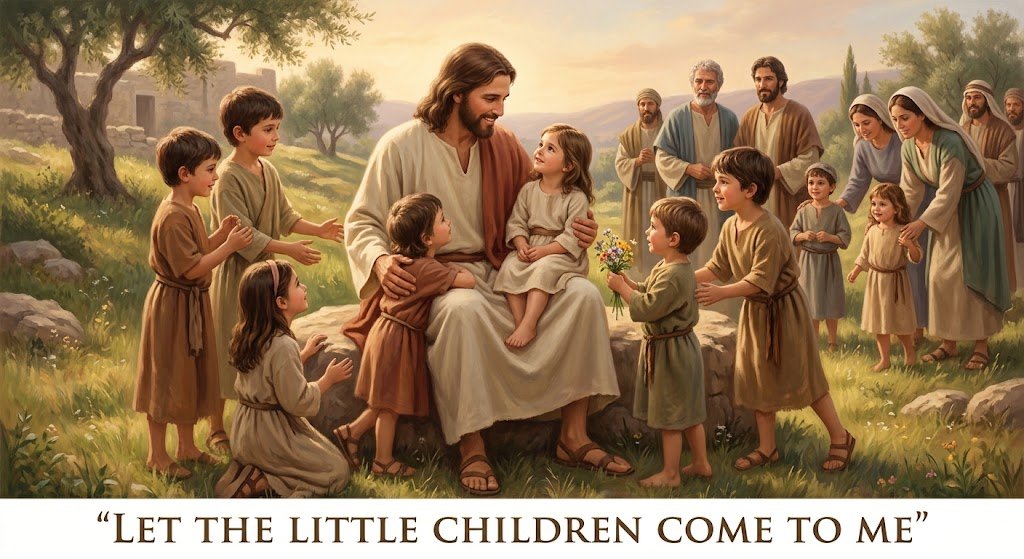
Introduction: Understanding “Let the Little Children Come to Me”
The phrase “let the little children come to me” is one of the most beloved teachings of Jesus Christ, showing His compassion, love, and welcoming heart toward children. Found in the Gospels, this powerful statement reveals an important spiritual truth: children are not insignificant in God’s kingdom. Instead, Jesus placed them at the center of His message about faith, humility, and belonging.
When Jesus said “let the little children come to me,” He was responding to people who tried to prevent children from approaching Him. His words challenged the social attitudes of His time and demonstrated that every person, regardless of age or status, has value before God.
This teaching continues to influence Christian families, churches, educators, and communities around the world. It reminds believers that faith is not only about knowledge or religious achievement. It is also about trust, innocence, humility, and a sincere relationship with God.
The Bible Verse Behind “Let the Little Children Come to Me”
The phrase comes from several passages in the New Testament, including:
Matthew 19:14:
“Let the little children come to me and do not hinder them, for the kingdom of heaven belongs to such as these.”
Similar accounts appear in:
- Mark 10:14
- Luke 18:16
In these passages, parents brought their children to Jesus so He could bless them. However, the disciples attempted to stop them, possibly believing children were interrupting Jesus’ important work.
Jesus reacted strongly. He did not ignore the children or consider them a distraction. Instead, He welcomed them and used the moment to teach a deeper lesson about the nature of God’s kingdom.
Why Did Jesus Say “Let the Little Children Come to Me”?
The meaning behind “let the little children come to me” goes far beyond simply allowing children to meet Jesus. It reflects several important spiritual principles.
1. Jesus Values Every Person
During the time of Jesus, children often had little social power. They depended completely on adults and were not always given the attention they deserved.
By welcoming children publicly, Jesus showed that God’s love is not limited to influential people, religious leaders, or wealthy individuals.
The message was clear:
- Children matter to God.
- The vulnerable deserve care.
- Everyone is welcome in God’s presence.
This principle remains important today when discussing child protection, education, family values, and spiritual development.
2. Children Represent Humble Faith
Jesus connected children with the kingdom of heaven because children often display qualities that adults lose over time.
Children naturally demonstrate:
- Trust
- Dependence
- Openness
- Humility
- Willingness to learn
When Jesus spoke about children, He was not saying children are perfect. Instead, He highlighted the attitude of trust that believers should have toward God.
Faith requires recognizing that humans depend on God rather than relying only on personal strength or achievements.
The Historical Context of Jesus Welcoming Children
To fully understand “let the little children come to me,” it helps to consider the culture of ancient Jewish society.
Children were loved within families, but they did not hold the same social importance as adults. Public teachers and religious leaders were usually approached by adults, especially those seeking wisdom or healing.
Jesus changed this expectation.
By making children part of His ministry, He demonstrated a different vision of leadership:
- Great leaders serve the overlooked.
- Spiritual importance is not measured by social status.
- God’s kingdom welcomes the humble.
This moment became one of many examples where Jesus elevated people who were often ignored by society.
The Spiritual Meaning of “Let the Little Children Come to Me”
The deeper spiritual meaning of this teaching can be understood through several themes.
A Message of Acceptance
Jesus’ invitation shows that God does not reject people who come with sincerity. Children approaching Jesus represent anyone seeking God with an open heart.
The verse encourages believers to approach God with confidence, knowing they are welcomed.
A Lesson About Childlike Faith
Many Christians use this passage when teaching about childlike faith. This does not mean childish faith. There is an important difference.
Childish faith may lack understanding, but childlike faith includes:
- Genuine trust
- Wonder
- Dependence
- A willing heart
Jesus encouraged adults to recover these qualities in their relationship with God.
A Reminder for Christian Families
The phrase also carries a responsibility for parents and communities.
If Jesus welcomed children, believers are called to create environments where children can:
- Learn about faith
- Feel loved
- Ask questions
- Develop spiritually
- Experience kindness
Christian parenting often draws inspiration from this passage because it emphasizes nurturing rather than controlling children.
How “Let the Little Children Come to Me” Applies Today
Although this teaching was spoken thousands of years ago, its message remains relevant.
1. Encouraging Children’s Spiritual Growth
Many churches use this verse as a foundation for children’s ministries, Sunday schools, and youth programs.
The goal is not simply teaching religious information. It is helping children develop:
- Compassion
- Moral understanding
- Prayer habits
- A sense of God’s love
2. Protecting and Supporting Children
The words of Jesus also encourage society to care for children’s well-being.
This includes:
- Providing safe environments
- Supporting education
- Listening to children’s voices
- Protecting them from harm
The biblical message aligns with the responsibility adults have to guide and protect younger generations.
3. Learning From Children
Adults often teach children, but Jesus’ message suggests that adults can also learn from children.
Children can remind adults about:
- Simplicity
- Forgiveness
- Joy
- Trust
- Curiosity
Sometimes the greatest spiritual lessons come from the people society considers the least important.
Lessons Parents Can Learn From “Let the Little Children Come to Me”
Parents often look to this passage for guidance in raising children with faith and compassion.
Create a Welcoming Home Environment
A child should experience love and acceptance at home. A faith-filled environment is built through daily actions, not only words.
Parents can demonstrate faith through:
- Kindness
- Patience
- Prayer
- Forgiveness
- Service to others
Teach Through Example
Children learn by observing adults.
Parents who practice compassion and honesty provide powerful lessons that children remember.
Encourage Questions About Faith
Children naturally ask questions. Instead of discouraging curiosity, parents can use questions as opportunities for deeper conversations.
Faith grows through understanding, exploration, and trust.
What Churches Can Learn From “Let the Little Children Come to Me”
Church communities can also apply this teaching in practical ways.
A welcoming church should consider:
- Creating safe children’s spaces
- Supporting families
- Training children’s ministry workers
- Encouraging young voices
- Making worship accessible for all ages
Jesus’ example shows that children are not merely the future of the church. They are part of the church today.
Common Misunderstandings About This Bible Passage
Does “Let the Little Children Come to Me” Mean Children Automatically Understand Everything About Faith?
No. The passage does not suggest children have complete spiritual knowledge. Instead, it highlights their openness, trust, and humility.
Children still need guidance, teaching, and support as they grow.
Was Jesus Only Talking About Young Children?
While the immediate context involves children, the broader lesson applies to everyone who approaches God with humility.
The message includes all people who seek God sincerely.
Why Did the Disciples Try to Stop the Children?
The Bible does not provide a detailed explanation, but their reaction may reflect common cultural attitudes about importance and access.
Jesus used this moment to correct their understanding of who belongs in God’s kingdom.
The Lasting Impact of Jesus’ Words
The phrase “let the little children come to me” has become a symbol of compassion, acceptance, and faith throughout Christianity.
It appears in:
- Church teachings
- Children’s programs
- Christian artwork
- Family devotionals
- Religious education materials
Its popularity comes from a simple but profound message: God’s love includes everyone.
Jesus did not see children as interruptions. He saw them as examples of the heart needed to enter God’s kingdom.
Frequently Asked Questions About “Let the Little Children Come to Me”
1. Where does “let the little children come to me” appear in the Bible?
The phrase appears in Matthew 19:14, Mark 10:14, and Luke 18:16. These passages describe Jesus welcoming children who were brought to Him for blessings.
2. What is the main lesson of “let the little children come to me”?
The main lesson is that Jesus values children and welcomes those who approach God with humility, trust, and sincerity. It teaches that everyone has a place in God’s kingdom.
3. What does childlike faith mean in Christianity?
Childlike faith means trusting God with humility and openness. It does not mean having an immature understanding of faith, but rather having a sincere and dependent relationship with God.
4. Why is this verse important for parents?
This verse reminds parents that children are spiritually valuable and deserve love, guidance, protection, and opportunities to grow in faith.
5. How can Christians apply “let the little children come to me” today?
Christians can apply this teaching by welcoming children, supporting families, protecting young people, and encouraging children to develop a meaningful relationship with God.
Conclusion: Living the Message of Jesus’ Welcome
The words “let the little children come to me” remain one of Jesus’ clearest demonstrations of love and acceptance. This teaching reminds believers that God’s kingdom is built on humility, trust, and compassion rather than social importance or personal achievement.
For parents, churches, and communities, this message creates a responsibility to care for children and help them discover faith in a safe and loving environment.
The next step is simple: welcome children the way Jesus did. Listen to them. Guide them. Value them. And remember the powerful truth behind His words — every child is precious in the eyes of God.

1 Comment
Pingback: LetsConnecting.com