
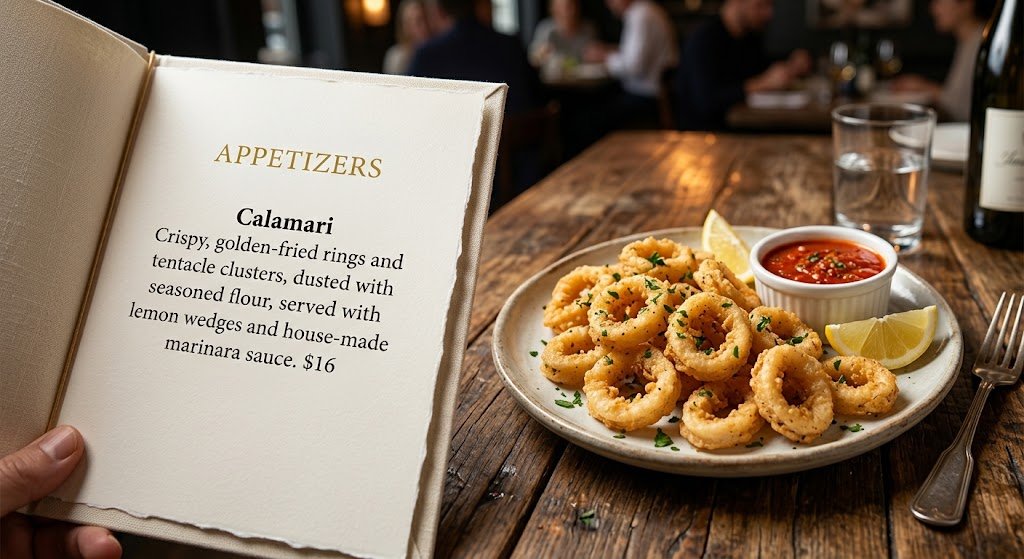
If you have ever scanned a restaurant menu and wondered what is squid called on a menu, the simplest answer is calamari. Calamari is the culinary term commonly used for squid when it is prepared as food, particularly in Italian-inspired, Mediterranean, and American restaurants. Merriam-Webster defines calamari specifically as squid used as food, while the U.S. Food and Drug Administration recognizes both “Squid” and “Calamari” as acceptable market names for numerous squid species.
That does not mean every squid dish will actually contain the word “calamari.” Depending on the cuisine, preparation method, squid species, and restaurant style, you might see fried calamari, grilled squid, stuffed squid, salt-and-pepper squid, ika, calamari fritti, or a species-specific name.
Knowing these terms makes ordering much easier. It also helps you understand exactly what is arriving at your table.
What Is Squid Called on a Menu?
In most Western restaurants, squid prepared for eating is commonly called calamari. The terms are closely connected: calamari isn’t a completely different type of seafood—it refers to squid used as food.
The FDA’s Seafood List confirms that various species can legitimately carry Squid or Calamari as acceptable market names. Examples include European flying squid (Todarodes sagittatus), Indian squid (Uroteuthis duvauceli), California market squid (Doryteuthis opalescens), and bigfin reef squid (Sepioteuthis lessoniana).
So, if you’re asking what is squid called on a menu, look for calamari first. However, restaurants may use several other names depending on their culinary tradition.
Common menu descriptions include:
- Calamari
- Fried calamari
- Calamari fritti
- Grilled calamari
- Grilled squid
- Salt and pepper squid
- Stuffed squid
- Crispy squid
- Baby squid
- Ika on Japanese menus
- Calamares on Spanish menus
- Calamari rings
- Squid tentacles
- Whole squid
The cooking style usually appears alongside the seafood’s name, which gives you a much better idea of what the dish will actually look and taste like.
Why Is Squid Called Calamari?
The word calamari comes into English through Italian. Merriam-Webster traces it to Italian calamaro/calamaio and ultimately to Medieval Latin calamarium, meaning an ink pot or pen case—a connection that makes sense considering the ink squid produce.
Over time, “calamari” became a familiar culinary term in English-speaking countries.
That explains why someone asking what is squid called on a menu will so often encounter calamari rather than the straightforward word “squid.” The Italian-derived term has become firmly associated with squid as prepared food.
There is an important distinction, though. Calamari is not inherently a cooking method.
People sometimes assume calamari means “fried squid rings.” It doesn’t.
Squid can be grilled, sautéed, braised, stuffed, simmered, fried, or served in other preparations and still be described as calamari.
Is Calamari the Same as Squid?
Yes, in ordinary culinary usage, calamari is squid.
Merriam-Webster’s definition is particularly direct: calamari means squid used as food. The FDA also lists “Squid or Calamari” as acceptable market names for numerous species sold in the United States.
The confusion often comes from presentation.
When people picture squid, they may imagine the whole marine animal with its elongated body, arms, and tentacles. When they picture calamari, they often imagine a plate of golden fried rings served with lemon and dipping sauce.
Those rings usually come from the mantle, the tube-shaped main portion of the squid’s body. Tentacles may be served alongside them.
So, when deciding what is squid called on a menu, don’t assume that “calamari” indicates a different seafood species simply because its appearance has changed during preparation.
What Does Calamari Look Like on a Restaurant Menu?
Restaurants frequently describe calamari according to the cooking technique rather than giving customers detailed information about the species.
Fried Calamari
This is probably the version most diners recognize.
The squid’s body is typically sliced crosswise into rings, coated or battered, and fried. Tentacles can also be included.
You may see descriptions such as:
Crispy Calamari
Fried Calamari Rings
Lightly Battered Calamari
Calamari Fritti
The accompanying ingredients can vary widely, from lemon and herbs to aioli, marinara sauce, peppers, or other regional accompaniments.
Grilled Squid or Grilled Calamari
Not every calamari dish is breaded.
Grilling can leave the squid whole, split the mantle into larger pieces, or use smaller squid. A restaurant may call the dish either grilled squid or grilled calamari.
This is a good example of why knowing what is squid called on a menu involves more than memorizing one word.
Salt and Pepper Squid
Salt and pepper squid is especially common in Chinese and other Asian-style restaurants.
The squid is generally cut into pieces, seasoned, and fried until crisp. Chili, garlic, scallions, pepper, or other aromatics may accompany it depending on the restaurant.
Stuffed Squid
Whole squid bodies can act almost like natural tubes that hold a filling.
Depending on the cuisine, the filling might include breadcrumbs, herbs, vegetables, rice, seafood, meat, or combinations of these ingredients.
What Is Squid Called on an Italian Menu?
On an Italian or Italian-inspired menu, calamari is the term you are particularly likely to encounter.
One preparation you may recognize is calamari fritti, essentially fried squid. Restaurants may simply write “calamari,” especially when the preparation is obvious from the dish description.
Italian cuisine is also the reason the word became so familiar to English-speaking diners. The English culinary term has Italian roots rather than being a scientific classification.
So if you’re wondering what is squid called on a menu at an Italian restaurant, scanning for calamari is usually your best starting point.
What Is Squid Called on a Japanese Menu?
Japanese menus introduce another useful term: ika.
The FDA’s fishery guidance lists the Japanese vernacular name IKA with SQUID as its corresponding U.S. market name.
Depending on the restaurant, you might encounter ika in sushi, sashimi, grilled preparations, or cooked dishes.
For diners unfamiliar with Japanese seafood terminology, this is an important distinction. A menu item doesn’t necessarily have to say “squid” or “calamari” for squid to be the primary ingredient.
If you’re avoiding squid because of an allergy or dietary preference, always ask the restaurant rather than relying exclusively on familiar English terminology.
What Is Squid Called on a Spanish Menu?
On Spanish-language menus, watch for calamar or calamares.
One especially recognizable preparation is squid cut into rings and fried. Spanish restaurants may offer various regional preparations rather than the American Italian-style fried calamari appetizer familiar to many diners.
The terminology changes, but the underlying seafood remains squid.
This illustrates an important point when researching what is squid called on a menu: cuisine and language strongly influence how the ingredient is presented.
Common Types of Squid You May Be Eating
“Squid” doesn’t identify only one species.
The FDA Seafood List contains numerous squid species and identifies acceptable market names for seafood sold in U.S. interstate commerce. Its database was updated in August 2026 and includes scientific, market, and common-name information designed to assist with seafood naming.
Examples include:
- California market squid — Doryteuthis opalescens
- European squid — Loligo vulgaris
- Indian squid — Uroteuthis duvauceli
- Bigfin reef squid — Sepioteuthis lessoniana
- Northern shortfin squid — Illex illecebrosus
- Southern shortfin squid — Illex coindetii
- Swordtip squid — Uroteuthis edulis
Several of these have Squid or Calamari listed as acceptable market names by the FDA.
That means two restaurants selling “calamari” don’t necessarily have to be serving exactly the same species.
Are Calamari Rings Actually Squid?
Yes. Genuine calamari rings are typically made by slicing the squid’s tubular mantle across its width.
Imagine cutting a hollow tube into horizontal sections. Each cut naturally produces a ring.
This explains their remarkably uniform-looking shape without requiring the squid itself to be naturally ring-shaped.
Some dishes also contain the tentacle portions, which look dramatically different from the smooth rings but come from the same animal.
Therefore, when asking what is squid called on a menu, remember that “calamari rings” describes both the ingredient and how part of the squid has been cut.
Does Calamari Always Mean Fried Squid?
No.
This is one of the most common misunderstandings surrounding the term.
Calamari describes squid as food, not exclusively fried squid.
A restaurant could serve:
- grilled calamari
- sautéed calamari
- stuffed calamari
- braised calamari
- crispy fried calamari
- calamari salad
- pasta with calamari
- seafood stew containing calamari
If you’re concerned about calories, breading, gluten, oil, or another ingredient, check the preparation instead of assuming all calamari dishes are fried.
What Does Squid Taste Like?
Squid has a relatively mild seafood flavor, which makes it adaptable to many cuisines.
Its texture is more distinctive than its flavor. Properly cooked squid can be tender with a slight chew, while poorly handled squid may become noticeably rubbery.
Preparation also changes the experience significantly.
Fried squid gets much of its immediate flavor and crunch from its coating and seasonings. Grilled preparations can emphasize the seafood itself, while squid cooked in sauces absorbs surrounding herbs, spices, aromatics, and other ingredients.
That versatility is one reason the same ingredient appears in Mediterranean, Italian, Spanish, Japanese, Chinese, Korean, and many other culinary traditions.
Squid vs. Octopus: Don’t Confuse the Two
Squid and octopus are both cephalopods, but they are not the same animal.
Squid typically have eight arms plus two longer tentacles, along with a more elongated body. Merriam-Webster’s zoological definition describes squid as cephalopods with eight short arms, two usually longer tentacles, a tapered body, and fins.
Octopuses have eight arms and a noticeably different body structure.
Once prepared and sliced, however, seafood can be harder for an inexperienced diner to identify visually. If the exact ingredient matters to you, ask your server.
How to Recognize Squid on an Unfamiliar Menu
Instead of looking only for “squid,” learn the handful of terms associated with it.
When determining what is squid called on a menu, check for:
- Calamari — common English/Italian-derived culinary term
- Ika — Japanese term encountered on Japanese menus
- Calamar/Calamares — terminology you may encounter on Spanish menus
- Squid rings — sliced squid mantle
- Baby squid — smaller squid presented in various preparations
- Grilled squid — straightforward preparation description
- Salt and pepper squid — popular Asian-style preparation
- Calamari fritti — fried calamari
Then read the rest of the dish description.
Words such as crispy, battered, grilled, stuffed, fried, sautéed, charred, or braised tell you far more about how the squid will arrive.
How to Order Squid With Confidence
If you’ve never eaten squid, fried calamari is an accessible introduction because the familiar crispy coating and simple presentation make the dish easy to approach.
But don’t stop there.
Grilled or lightly cooked squid can give you a clearer sense of the seafood’s natural flavor and texture. Japanese preparations provide yet another experience.
Before ordering, consider asking:
- Is the squid fried or grilled?
- Does the dish contain rings, tentacles, or whole squid?
- What sauce accompanies it?
- Is the calamari battered?
- What other seafood is included?
- Which squid species is being served, if that matters to you?
This is particularly useful when what is squid called on a menu isn’t immediately obvious from the restaurant’s terminology.
FAQ About What Squid Is Called on a Menu
What is the restaurant name for squid?
The most familiar restaurant name for squid is calamari. Merriam-Webster defines calamari as squid used as food, and FDA seafood guidance recognizes “Squid” and “Calamari” as acceptable market names for multiple squid species.
Is calamari squid or octopus?
Calamari is squid, not octopus. Although both animals belong to the cephalopod group and can sometimes look similar after preparation, they are different animals with distinct anatomy.
Why do restaurants call squid calamari?
Restaurants use “calamari” because the Italian-derived word became established in English as a culinary name for squid. Its linguistic roots can ultimately be traced to terms associated with an ink pot, reflecting squid’s famous ability to release ink.
What is squid called at a sushi restaurant?
At Japanese restaurants, squid may appear as ika. FDA fishery guidance specifically identifies “IKA” as a Japanese vernacular name corresponding to the U.S. market name “SQUID.” Depending on the restaurant, it may be served in sushi, sashimi, grilled dishes, or other preparations.
Is fried calamari always made from squid?
Calamari, by definition, refers to squid used as food, so a properly identified fried calamari dish is a squid dish. The FDA also recognizes Squid and Calamari as acceptable market names for numerous species. If identifying the exact seafood is important because of allergies or dietary restrictions, however, confirm the ingredients directly with the restaurant.
Conclusion: What to Look for When Ordering Squid
So, what is squid called on a menu? Most commonly, the answer is calamari. But depending on where you’re eating, you may also encounter squid under names such as ika, calamares, calamari fritti, grilled squid, salt and pepper squid, crispy squid, or squid rings.
The easiest rule is simple: calamari is squid, but squid dishes aren’t always labeled calamari.
Next time you’re reading a seafood menu, look beyond the dish name and check the preparation. Whether it’s fried into crisp rings, grilled whole, stuffed, sliced for Japanese cuisine, or simmered in a seafood dish, you’ll know exactly what you’re ordering—and you’ll be much less likely to overlook a squid dish hiding behind an unfamiliar name.
