
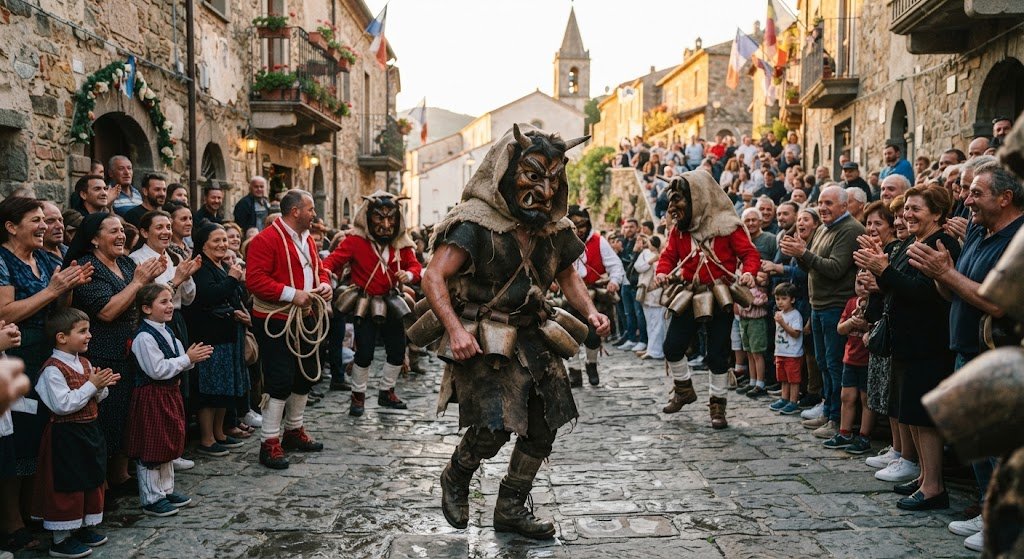
Search for Ciulioneros and you enter an unexpectedly complicated corner of the internet. Some websites describe it as an old cultural community built around storytelling, dance, craftsmanship, festivals, and ancestral traditions. Others connect the word with Latin American folklore, while newer discussions treat it as an emerging internet term whose exact meaning remains uncertain.
That distinction matters.
A colorful description repeated across multiple websites does not automatically become historical evidence. At present, the safest way to understand the term is to separate documented online usage from claims about ancient cultural heritage. Doing so produces a far more useful picture of why the word is attracting attention and why its meaning remains surprisingly difficult to pin down.
What Does Ciulioneros Mean?
There is currently no single, independently established definition of Ciulioneros supported by major dictionaries, recognized cultural institutions, or readily identifiable academic literature.
Instead, the word appears primarily across relatively recent online articles. Those articles assign it several overlapping meanings, including:
- a community preserving cultural traditions;
- performers or storytellers who transmit collective memory;
- a tradition involving dance, music, costumes, and ritual;
- an expression associated with Latin American or Mexican folklore;
- a broader symbol of cultural identity and continuity;
- and, in some newer interpretations, an evolving digital term or community identity.
That variation is important. If the word represented a clearly documented historical people, place, or tradition, researchers would normally expect to find identifiable geographic references, historical records, linguistic evidence, museum collections, academic research, government heritage documentation, or firsthand community sources.
Those foundations are difficult to establish here.
This does not mean the word is meaningless. It means its online meaning is much easier to document than the historical narrative now surrounding it.
Why Is Ciulioneros Suddenly Appearing Online?
The internet can turn obscure vocabulary into searchable concepts remarkably quickly.
A term appears in one publication. Other websites attempt to explain it. Search engines begin indexing those explanations, more publishers notice the growing query, and soon a substantial body of content exists around a word that previously had little visible digital footprint.
That process can create what might be called semantic accumulation: every new article adds another layer of meaning.
Several current pages describe Ciulioneros through themes such as oral storytelling, collective identity, music, dance, agricultural celebrations, traditional crafts, and cultural preservation. Other recent coverage takes a more cautious position, noting that the word has multiple competing online interpretations and an uncertain etymology.
The result is unusual. The search term looks increasingly established because considerable content surrounds it, yet the underlying definition remains unsettled.
The Claimed Cultural Origins of Ciulioneros
Many online explanations frame Ciulioneros as an inherited cultural phenomenon shaped by generations of community life.
Common narratives associate it with Indigenous heritage, oral history, agricultural cycles, ritual performance, colonial cultural exchange, and community storytelling. Some publications go further and connect the concept specifically with Mexico or wider Latin America.
These descriptions share familiar features found in many genuine traditional cultures. Oral transmission, ceremonial dance, craft knowledge, music, seasonal celebrations, and intergenerational teaching are all well-documented mechanisms through which communities preserve intangible heritage.
The problem is attribution.
Where Is the Historical Evidence?
To establish a specific cultural tradition historically, researchers normally look for multiple forms of corroboration.
These might include dated manuscripts, ethnographic studies, linguistic records, archaeological evidence, oral histories collected from an identifiable community, archival photographs, museum holdings, government cultural registers, or research from universities and heritage organizations.
Current online discussions frequently describe ancient or centuries-old Ciulionero traditions without identifying this type of evidence.
One prominent article, for example, portrays the subject almost as a geographic destination and mentions archaeological findings, trade routes, festivals, local architecture, distinctive foods, and preservation programs. Yet those descriptions are not accompanied by enough identifying information to independently locate the supposed archaeological sites, institutions, community, or geographic region.
That is a significant verification gap.
Is Ciulioneros a Place, a People, or a Tradition?
This is where search results become particularly confusing.
Some descriptions make the word sound like the name of a place. Readers encounter phrases about streets, landscapes, visitors, local cuisine, tourism, and residents.
Other articles describe Ciulioneros as people or cultural custodians, particularly performers responsible for keeping inherited traditions alive.
A third interpretation treats the term less literally. Under this reading, it represents a cultural concept centered on storytelling, identity, artistic expression, and community memory.
These interpretations are not interchangeable.
Without a verified geographic location or established ethnographic definition, describing it definitively as a destination or distinct ethnic population goes beyond the available evidence. The more defensible description is that it is an emerging, ambiguously defined term surrounded by cultural interpretations online.
Storytelling and the Ciulioneros Narrative
Storytelling is one of the most consistent themes associated with the term.
Online accounts describe elders sharing memories, legends, historical experiences, and moral lessons with younger generations. In these narratives, stories function as more than entertainment. They become an informal archive through which identity survives.
That general cultural mechanism is credible. Oral tradition has preserved genealogies, ecological knowledge, beliefs, historical memory, social norms, songs, and community narratives across societies worldwide.
What cannot yet be confidently established is whether there is a historically identifiable community specifically using the name Ciulioneros for this tradition.
This distinction prevents a plausible cultural description from being mistaken for verified history.
Dance, Music, and Performance
Another recurring interpretation centers on performance.
Articles discussing the term frequently mention dancing, rhythmic music, handmade instruments, masks, elaborate clothing, ceremonial movement, and communal celebrations. Some writers characterize performers as cultural guardians who encode stories and collective memories through movement.
Again, the broader idea makes anthropological sense. Performance can operate as a form of intangible cultural heritage, carrying information that cannot be preserved completely through written language.
Symbolism in Performance
Within the online narrative, costume, rhythm, movement, and visual symbolism supposedly communicate themes such as:
- ancestry and collective memory;
- relationships with land and nature;
- seasonal or agricultural cycles;
- community solidarity;
- spirituality and ritual;
- historical continuity;
- and the transmission of values between generations.
Readers should nevertheless distinguish between descriptions associated online with the term and practices conclusively documented as belonging to a named historical Ciulionero community.
That distinction is central to understanding the subject accurately.
Traditional Crafts and Artistic Identity
Craftsmanship appears repeatedly in discussions of Ciulioneros culture.
Textile work, pottery, masks, handmade objects, natural materials, decorative patterns, and locally inspired art are commonly mentioned. Such crafts are often portrayed as physical carriers of memory, with techniques supposedly handed from one generation to another.
This concept reflects a genuine principle of heritage preservation. Traditional craftsmanship can preserve technical knowledge, symbolic systems, aesthetic conventions, and social relationships.
But specific claims require specific evidence.
If an article attributes a particular textile technique, mask style, ceramic tradition, or motif to this culture, readers should look for an identifiable artifact collection, museum catalogue, artisan community, geographic provenance, or ethnographic source before treating the attribution as established fact.
Festivals Commonly Associated With Ciulioneros
Online coverage has attached several colorful celebrations to the subject.
References include harvest festivals, seasonal ceremonies, communal dances, bonfires, solstice observances, music, elaborate costumes, and celebrations tied to nature or agriculture.
One frequently circulated article even names events resembling a Harvest Festival, Moonlight Dance Festival, and Fire Ceremony. These details create an appealing picture, but the article does not provide enough external documentation to establish these as recognized festivals attached to a verifiable community.
That is precisely where responsible cultural writing needs restraint.
A named festival should ideally be traceable through event records, local authorities, tourism boards, cultural organizations, historical documentation, or firsthand community sources. Otherwise, the description should be presented as an online claim rather than historical fact.
What About Ciulioneros Cuisine?
Food is another area where the online story becomes unusually specific.
Some content describes seafood dishes, fish-filled pastries, craft beer, sweets, herbs, agricultural produce, and regional cooking techniques. Such details can make the culture appear geographically concrete.
Yet cuisine is highly traceable.
An established regional food tradition normally leaves evidence through recipe collections, local terminology, restaurants, historical cookbooks, agricultural practices, community testimony, culinary scholarship, or geographic documentation.
Without that supporting chain, claims about a distinct Ciulioneros cuisine should be approached cautiously.
Foods such as ceviche, empanadas, and dulce de leche are real and have well-established histories across Latin America. Their existence, however, does not independently prove the existence of a separate culinary tradition carrying this particular label.
Ciulioneros and Cultural Preservation
Even with the uncertainty surrounding the term, the conversation raises a legitimate question: how does cultural heritage survive modernization?
Authentic heritage preservation requires more than publishing attractive descriptions online. It depends on the communities that actually own, practice, teach, reinterpret, and transmit traditions.
Effective preservation can involve:
- recording oral histories with informed community participation;
- documenting endangered languages and vocabulary;
- supporting traditional artisans economically;
- digitizing historical archives;
- teaching younger generations traditional skills;
- protecting culturally significant landscapes and sites;
- funding community-led museums and cultural organizations;
- and ensuring tourism benefits rather than exploits local communities.
These principles are especially important when discussing obscure traditions online. Poorly sourced content can unintentionally transform cultural preservation into cultural invention.
How Digital Culture Changes the Meaning of Ciulioneros
Words no longer need dictionaries to spread.
Social networks, blogs, forums, video platforms, search engines, and online communities can collectively develop meanings for unfamiliar terms. Sometimes a word begins with one definition and gradually acquires several others.
That may help explain the current trajectory of Ciulioneros.
A term initially encountered as obscure vocabulary can become connected with heritage, identity, creativity, folklore, and community because publishers repeatedly contextualize it that way. Eventually, those associations become part of the word’s digital history—even when its earlier history remains unclear.
Search Popularity Is Not Historical Proof
This creates an important research lesson.
Google results demonstrate that information exists online. They do not automatically demonstrate that every statement appearing within those results is historically accurate.
Ten websites repeating the same unsupported origin story are not equivalent to ten independent historical sources.
Researchers should instead ask where the earliest verifiable usage occurs, whether independent primary sources exist, whether a named community uses the term for itself, and whether reputable linguistic or cultural institutions recognize it.
Those questions provide much stronger evidence than repetition.
How to Research Ciulioneros Responsibly
Anyone researching the subject should use a simple verification framework.
First, identify the claim. Is the page claiming that the term represents a location, ethnic community, festival, cuisine, artistic tradition, or internet expression?
Second, look for provenance. A historical claim should lead somewhere—an archive, book, scholar, museum, community organization, geographic location, historical document, or identifiable oral-history source.
Third, check source independence. Multiple websites using nearly identical descriptions may simply be repeating one another.
Fourth, separate absence of evidence from evidence of absence. Limited documentation does not prove that a tradition never existed. It simply means confident historical claims cannot yet be justified.
Finally, prefer precise uncertainty over invented certainty. Saying that the origin remains unresolved is more useful than supplying an impressive but unsupported origin story.
Why the Term Still Matters
The uncertainty itself makes this subject worth examining.
Ciulioneros demonstrates how cultural narratives are constructed online. Search engines can preserve genuine knowledge, but they can also accelerate repetition, merge unrelated ideas, and give unsupported claims an appearance of authority.
For writers, researchers, and readers, the lesson extends far beyond one unusual keyword.
Cultural information deserves a higher evidentiary standard because inaccurate descriptions can obscure real communities, misattribute traditions, and create false histories that become increasingly difficult to correct once widely indexed.
The responsible approach is neither to dismiss the term nor romanticize it.
It is to investigate it.
Frequently Asked Questions About Ciulioneros
What are Ciulioneros?
The term currently has no universally established definition. Recent online sources variously describe it as a cultural community, storytelling tradition, group of performers, expression of heritage, or emerging digital concept. Strong independent evidence supporting one definitive historical interpretation remains limited.
Where did Ciulioneros originate?
The exact origin has not been reliably established. Some websites associate the term with Indigenous, Mexican, or broader Latin American traditions, but these geographic claims require stronger historical, linguistic, or institutional documentation before they can be treated as settled fact.
Is Ciulioneros a real cultural tradition?
It is certainly a real term circulating online, and a growing collection of webpages associates it with cultural heritage. That is different from demonstrating that it is the historical name of a specific traditional culture. Establishing the latter would require independent primary or authoritative sources.
What traditions are associated with Ciulioneros?
Online descriptions commonly associate the concept with storytelling, dance, music, craftsmanship, ceremonial clothing, agricultural celebrations, ancestral memory, nature, and community gatherings. These should currently be understood as reported associations unless reliable documentation establishes their provenance.
Why has Ciulioneros become popular online?
Its unusual name, cultural framing, and ambiguity make it highly searchable. As more publishers attempt to define the term, search visibility increases and additional interpretations emerge. This can create a feedback loop in which online repetition makes an obscure concept appear much more established than its documented history indicates.
Conclusion: Understanding Ciulioneros Without Turning Mystery Into Fact
The most interesting thing about Ciulioneros may not be the elaborate history attributed to it online. It may be how quickly the internet can construct a seemingly complete cultural narrative around an obscure term.
Stories about dance, oral tradition, crafts, festivals, food, ancestral knowledge, and community identity now surround the word. Those themes are culturally meaningful, but meaningful is not the same as historically verified.
For readers, the next step is simple: follow the evidence rather than the repetition. Look for early documented uses, named communities, academic research, linguistic records, museums, archives, cultural institutions, and firsthand testimony. If stronger evidence emerges, the history can be described with greater confidence.
Until then, Ciulioneros is best approached as an intriguing and evolving term whose digital footprint is clear, but whose precise historical, geographic, and cultural origins remain unresolved.
