
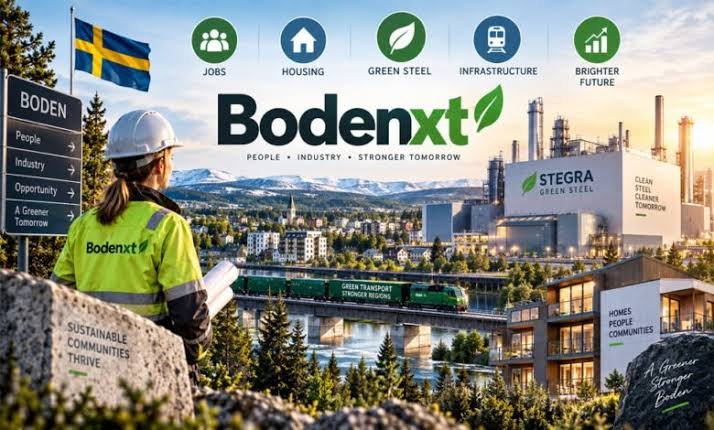
Boden is changing fast in northern Sweden. New green industry is bringing more jobs, workers, firms, and money into the area. But fast growth also brings new needs. People need homes, roads, schools, transport, water, power, and other basic services.
Bodenxt is the system Boden Municipality uses to help manage this growth. It is not a private company, software tool, or single building project. It helps connect different parts of town planning so they can grow together.
Stegra is one of the main reasons for this change. The company was once called H2 Green Steel. It is building a large green steel plant in Boden. This article looks at what the platform does, why it was created, how it links with Stegra, and how Boden is getting ready for fast growth.
Quick Facts
| Fact | Details |
|---|---|
| Name | Bodenxt |
| Type | Municipal development platform |
| Managed by | Boden Municipality |
| Location | Boden, northern Sweden |
| Main purpose | Manage fast industrial and community growth |
| Main growth driver | Stegra green steel project |
| Stegra’s former name | H2 Green Steel |
| Main focus areas | Skills, housing, business, transport, and utilities |
| Industrial focus | Green steel and hydrogen-based production |
| Planned hydrogen capacity | More than 700 MW |
| Planned green hydrogen output | More than 100,000 tonnes per year |
| Stegra emissions goal | Up to 95% lower CO₂ than traditional coke-fired blast furnaces |
| Reported population at end of 2025 | 28,624 registered residents |
| Housing plans | Around 1,300 apartments enabled through current plans |
| Reported rental market in May 2026 | Vacancy rate close to zero |
| Stegra-related relocation | Around 640 residents, including workers and family members |
| Wider job projection | Around 10,000 direct and indirect regional jobs |
| Jobs linked with Stegra | Around 2,000 in reported projections |
| New industrial railway | About 6 km long |
| Railway bridges | 9 |
| Train capacity | Up to 1,000 metres long |
| Boden Plug & Play | Around 70 hectares |
| Main challenges | Housing, worker shortages, utilities, public services, and project timing |
What Is Bodenxt?
Bodenxt is a development platform run by Boden Municipality. Its main job is to help the town deal with fast industrial and population growth. It brings many parts of local planning into one system.
These areas include:
- Housing
- Worker skills
- Local businesses
- Roads and rail
- Water and wastewater
- Power
- Public services
This matters because a new factory can create jobs much faster than a town can build homes, roads, schools, or water systems. A worker may get a good job but still have trouble moving to Boden if there is no home to rent.
The main goal is simple. Industrial growth should also work for the people who live in the town. Jobs, housing, transport, and public services need to grow at the same time.
Why It Was Created?
Boden is growing much faster than before. The municipality has said the town is doing about 20 years of normal growth in only a few years.
Large green industry projects are a big reason for this change. They need land, workers, power, roads, rail, suppliers, and many other services. New workers also need homes, shops, schools, childcare, healthcare, and transport.
The Swedish Armed Forces are also growing in the area. This adds more demand for workers, homes, and public services.
Why joined-up planning matters
Fast growth can cause problems when one part moves faster than another.
For example:
- New jobs without homes can cause a housing shortage.
- New homes without enough water can strain local systems.
- More workers can increase pressure on schools and healthcare.
- More businesses can create more traffic and power demand.
The plan brings these needs together so Boden can deal with them as one wider growth issue.
Boden and Stegra
Stegra and Bodenxt are linked, but they are not the same.
Stegra is a private industrial company. It was once called H2 Green Steel. The company is building a large green steel plant at Boden Industrial Park.
Stegra focuses on making iron and steel with a process that aims to use far less fossil fuel than normal steelmaking. The municipality has a different job. It must deal with the wider effects of this industrial growth.
A simple example
Stegra may hire a worker for its plant. But that worker still needs:
- A home
- Transport
- Shops
- Healthcare
- Childcare
- A school for their children
These wider needs are part of the town’s work.
Stegra is one of the biggest drivers of change in Boden. But the wider plan also covers local firms, housing, roads, public services, and other parts of the town.
How Green Industry Is Growing in Boden?
Boden has several things that make it useful for large green industry projects.
One of the main factors is access to fossil-free power. Green hydrogen and lower-carbon steel need a lot of electricity, so energy supply is very important.
Northern Sweden also has a long link with mining, energy, and heavy industry. This gives projects access to industrial skills, land, transport, and nearby suppliers.
How Green Steel works?
Normal steelmaking often uses coal. This process can create large amounts of carbon dioxide.
Stegra plans to use hydrogen in key parts of its steel process. This could lower the need for coal.
In simple terms, electricity is used to split water into:
- Hydrogen
- Oxygen
The hydrogen can then help process iron in place of part of the coal-heavy method used in older blast furnaces.
The planned hydrogen system is very large. Current plans include more than 700 megawatts of electrolysis capacity. The site is also planned to produce more than 100,000 tonnes of green hydrogen each year.
Stegra says its process could cut carbon dioxide emissions by up to 95% compared with steel made in normal coke-fired blast furnaces.
That number is a company target. It is not yet a final result from full commercial production. Large projects can still change as they are built and tested.
The Main Areas of the Plan
Bodenxt brings several parts of local growth together.
The main areas are:
- Skills
- Housing
- Business growth
- Infrastructure above ground
- Infrastructure below ground
Each area affects the others.
Skills
A growing town needs more than engineers.
It also needs:
- Technicians
- Builders
- Drivers
- Teachers
- Healthcare workers
- Shop staff
- Service workers
The town needs enough trained people to fill these jobs.
Housing
Housing is just as important as jobs.
A worker may accept a good job but still choose not to move if there is no suitable home. Families also need schools, childcare, shops, transport, and healthcare nearby.
This is why housing is a major part of the plan.
Business Growth
Large industry can create work for many other firms.
These may include:
- Transport companies
- Builders
- Engineering firms
- Repair and maintenance firms
- Shops
- Restaurants
- Local service firms
The goal is to help the whole local economy grow, not just one company.
Infrastructure Above Ground
This includes things people can easily see, such as:
- Roads
- Railways
- Walking routes
- Cycling paths
These links help workers, residents, suppliers, and local firms move around the area.
Infrastructure Below ground
Some of the most important systems are harder to see.
These include:
- Water
- Wastewater
- Drainage
- Power systems
- Fiber
- Other basic utilities
A new housing area cannot work well without enough water and power. A new company cannot run without good transport and basic services.
All these areas depend on each other. That is the main idea behind Boden’s wider growth plan. Jobs, homes, firms, roads, and public services all need to move forward together.
Bodenxt’ Jobs, Skills, and Education
Fast growth means Boden needs many new workers. The need is not only for engineers. New factories and a growing town need people in many types of jobs.
These can include:
- Engineers
- Technicians
- Machine workers
- Builders
- Drivers
- Repair workers
- Teachers
- Healthcare staff
- Shop workers
- Office staff
Boden Municipality has shared plans that point to about 10,000 direct and indirect jobs across the wider region. Around 2,000 of these have been linked with Stegra in reported plans. These are future job figures, not jobs that have all been created already.
Finding workers is only one part of the job. People also need a good reason to stay. A worker may like the job but still leave if they cannot find a home, school, childcare, or easy transport.
Training Local workers
Boden is also changing local education to meet future job needs.
One example is the Upper Secondary Engineering Programme at Björknäsgymnasiet. It is planned to start in autumn 2026. The course will connect school study with real work skills.
Stegra, SMS Group Nordic, local firms, and the Swedish Armed Forces have been linked with the program. The aim is to help students learn skills that can be useful in real jobs.
This kind of training can help young people find work close to home. It can also help local firms find workers without depending only on people moving in from other places.
Bodenxt Housing and Population Growth
Housing is one of the biggest problems linked with fast growth.
Boden ended 2025 with 28,624 registered residents. This was higher than the town had expected. There were also many temporary workers living in the area who were not part of the official population count.
Stegra has also brought new people to Boden. By late 2025, about 275 Stegra workers were reported as living in the town. When partners and children were added, around 640 new residents were linked with the company.
But more people need more homes.
Current town plans have made space for around 1,300 apartments. Still, the rental vacancy rate was reported as close to zero in May 2026. This means finding a rental home can be very hard.
Why Housing matters so much?
Think about a worker who gets a new job in Boden. The job may be good, but what happens if there is no home for the family?
That worker may choose to live somewhere else or may not take the job at all. This can make hiring harder for local firms.
Housing also affects people who already live in Boden. Young adults may need their first home. Families may need larger homes. Older people may want smaller homes.
The long-term goal is not only to bring workers into Boden for a short time. It is to make it possible for people to stay and build a life there.
Local Business Growth
Large industry can create work far beyond the factory gate.
New projects need builders, transport firms, repair teams, engineers, property firms, food services, shops, and many other businesses. This means local firms can gain new customers and new work.
By June 2025, Boden had reported 38 new companies setting up in the town since Stegra announced its investment. This does not mean every company came only because of Stegra, but it does show wider business growth around the same period.
Population growth can also help small businesses. More people need food, clothes, repairs, homes, transport, leisure, and other daily services.
Why more Businesses are important?
It would be risky for the town to depend too much on one large company.
Large projects can face delays. Costs can rise. Plans can change. If the local economy has many different firms, it may be better able to deal with these changes.
A wider mix of businesses can also create more types of jobs. This gives local people more choices and helps keep more money inside the area.
Bodenxt’ Roads, Rail, and Transport
Good transport is very important for a fast-growing industrial town.
One major project is the new railway link to Boden Industrial Park. The completed line is about six kilometres long and includes nine bridges. It can handle trains up to 1,000 metres long.
The railway links the industrial area with the wider national rail network. It was also reported as being finished one month early and under budget.
This line can help move raw materials and finished goods. It may also make the industrial park more useful for other firms in the future.
Roads and local travel
Roads around the industrial area are also being improved.
These roads matter to workers, trucks, suppliers, and local people. Walking and cycling routes are also part of the wider work.
Good transport is not only useful for factories. It also makes daily life easier for people who live in the town.
A company is more likely to open in an area when workers and goods can move in and out without major problems.
Water, Power, and Other Utilities
Some of the most important work is hidden below the ground.
New homes and factories need:
- Clean water
- Wastewater systems
- Drainage
- Power
- Fiber
- Other basic services
These systems must have enough space and power to serve a growing town.
For example, building 500 new homes is not enough if the water system cannot support them. The same is true for factories. A large plant cannot run without enough power, water, roads, and digital links.
This is why utility planning must happen early.
The Power challenge
Green steel and hydrogen need a lot of electricity.
Access to fossil-free power is one reason northern Sweden has attracted green industry. But the power system must still serve homes, schools, shops, hospitals, and other firms.
So the challenge is not only to produce more clean power. The system must also stay stable and reliable.
For Boden, this means planning for both industrial growth and normal daily life at the same time.
Circular Industry and Shared Resources
Another part of the wider plan is to use resources in a smarter way.
Boden Plug & Play is one example. The area covers about 70 hectares and is planned for green and circular businesses.
One main idea is called industrial symbiosis. The name may sound hard, but the idea is simple.
Waste from one company may be useful to another.
Example
A factory may create extra heat.
Instead of letting that heat go to waste, another nearby business may be able to use it. The same idea can work with other materials, energy, water, or side products.
This can lower waste and help firms use resources better.
It may also help Boden attract new companies that want to work close to other green industries.
Benefits, Challenges, and Future
The changes in Boden can bring many benefits.
More industry can mean more jobs. New firms can create more work. Housing plans can add new homes. Better roads and rail can improve travel and trade.
Education can also grow with the new job market. Local students may gain new ways to train for technical work.
Green steel could also cut emissions if the new process works as planned. Stegra says its method could cut carbon dioxide emissions by up to 95% compared with normal coke-fired blast furnaces. This is still a company target, not a final result from full production.
Main challenges
Fast growth also creates real problems.
Some of the biggest are:
- Not enough housing
- A lack of skilled workers
- Pressure on schools
- More demand for healthcare
- Heavy use of power
- More pressure on water systems
- High building costs
- Changes in project plans
- Too much dependence on one large company
Housing may be the clearest problem. If workers cannot find a home, firms may find it harder to hire people.
Public services also need to grow. More families mean more children in schools, more people using healthcare, and more demand for local services.
Large projects can also change. Building dates may move. Costs may rise. Funding plans may change. This is why the town needs a wider mix of businesses and jobs.
What happens next?
The next few years will show how well Boden can turn fast growth into long-term progress.
Some of the key things to watch are:
- How many new homes are finished
- How many workers stay in Boden
- How fast the population grows
- How major road and utility work moves forward
- How Stegra’s project develops
- How many new firms open outside the steel sector
Population growth alone will not tell the whole story. A stronger sign will be whether people can find homes, stay for many years, raise families, and build careers in the town.
The wider lesson is simple. Building a large factory is only one part of industrial growth. A town also needs homes, workers, schools, roads, water, power, businesses, and public services.
If these parts grow together, Boden may become a useful example for other small cities facing fast change from green energy, mining, factories, or other large projects.
FAQs
What is Bodenxt?
Bodenxt is Boden Municipality’s platform for managing fast growth in housing, jobs, businesses, transport, and public services.
Is Bodenxt the same as Stegra?
No, Stegra is the company building the green steel plant, while Bodenxt manages the wider changes around that growth.
Why was Bodenxt created?
It was created to help Boden handle rapid growth caused by new industries, more workers, new businesses, and rising demand for homes and services.
How many jobs could Bodenxt-related growth create?
Boden Municipality has projected around 10,000 direct and indirect regional jobs, with about 2,000 linked to Stegra.
What is the biggest challenge for Bodenxt?
Housing is one of the biggest challenges because rental availability has been very low while more workers and families are moving into the area.
