
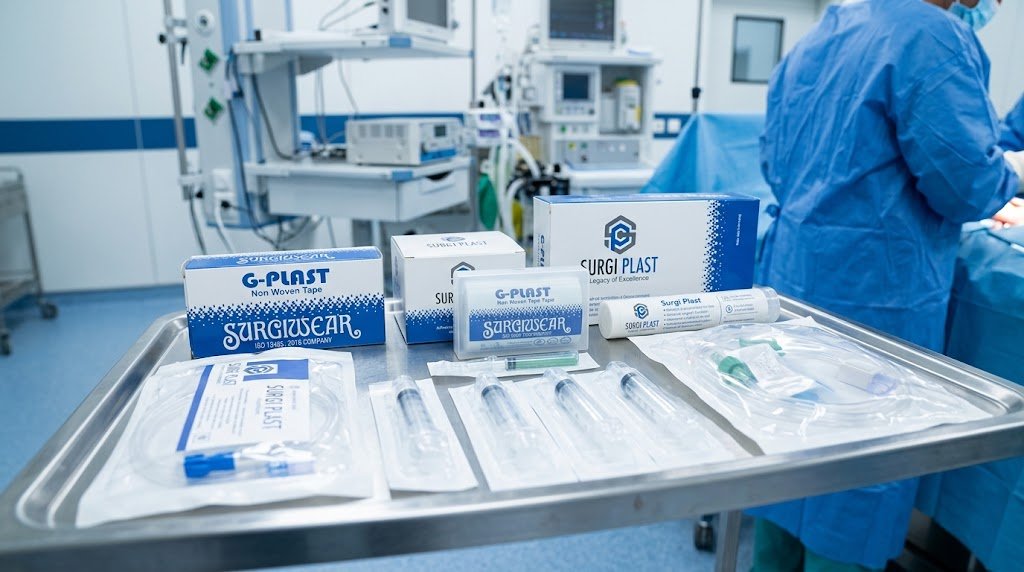
Surgi Plast is a Pakistan-based medical device manufacturer associated with disposable syringes, auto-disable injection equipment, and intravenous medical supplies. Operating in a healthcare industry where product reliability directly influences patient safety, the company serves a market that depends on sterile, accurately manufactured, and properly documented medical equipment.
Yet understanding a medical device manufacturer requires more than reviewing its product catalog. Buyers, healthcare professionals, and distributors need reliable information about regulatory registrations, manufacturing standards, product traceability, and potential safety concerns.
The company has attracted additional attention following 2026 regulatory alerts involving specific Clinic-branded auto-disable syringe batches. These developments highlight an important distinction: evaluating a manufacturer’s overall product range is different from investigating a documented problem with particular batches.
This guide examines the company’s background, manufacturing location, product categories, clinical applications, regulatory considerations, and practical purchasing precautions. It also explains how to interpret syringe safety alerts without making unsupported assumptions about unaffected medical devices.
What Is Surgi Plast?
Surgi Plast operates within Pakistan’s medical device manufacturing sector, focusing on disposable healthcare equipment used in clinical environments. Its associated product categories include injection devices and equipment designed to support intravenous treatment.
Unlike pharmaceutical companies that manufacture medicines, medical device manufacturers produce instruments, components, and supplies used to administer treatments or perform healthcare procedures. Their responsibilities extend beyond manufacturing to include product specifications, packaging integrity, traceability, and compliance with applicable regulations.
Surgi Plast Company Profile at a Glance
| Company information | Details |
|---|---|
| Company name | Surgi Plast |
| Industry | Medical device manufacturing |
| Country | Pakistan |
| Manufacturing location | Gadoon Amazai, District Swabi, Khyber Pakhtunkhwa |
| Documented product categories | Disposable syringes, auto-disable syringes, and IV sets |
| Associated brand | Clinic |
| Regulatory authority | Drug Regulatory Authority of Pakistan (DRAP) |
| Establishment reference reported in regulatory records | ELM-0030 |
| Primary market | Healthcare institutions, medical suppliers, and distributors |
The company’s documented manufacturing presence makes it part of Pakistan’s domestic medical supply chain. However, a manufacturing establishment reference should not be confused with unrestricted approval of every product, model, or production batch.
Surgi Plast Manufacturing Location and Company Background
Where Is the Manufacturing Facility Located?
The manufacturing address identified in published company and regulatory information is:
Plot No. 78, Road No. L-4, Industrial Estate, Gadoon Amazai, District Swabi, Khyber Pakhtunkhwa, Pakistan.
Gadoon Amazai is an industrial area supporting various manufacturing activities. Its location in District Swabi places the company within an established industrial region rather than a conventional retail medical equipment market.
For institutional buyers, the manufacturer’s physical location matters for several reasons. It helps establish the identity of the production facility, supports supplier verification, and provides a reference when comparing invoices, regulatory documentation, and product labels.
Why Manufacturing Location Matters to Healthcare Buyers
A clearly identifiable manufacturing facility improves accountability throughout the medical supply chain. When a hospital encounters a defective product, knowing its actual manufacturer helps purchasing and quality assurance teams investigate the issue.
Location details can also assist with documentation requests, distributor verification, and regulatory inquiries. Nevertheless, a registered address alone does not demonstrate that a facility currently satisfies every applicable manufacturing or quality requirement.
Surgi Plast Products and Their Healthcare Applications
The company’s product categories relate primarily to equipment used for injections, fluid administration, and selected vascular access procedures. Each category has distinct technical requirements, even when products appear visually similar.
1. Disposable Medical Syringes
Disposable syringes are fundamental tools in modern healthcare. They typically consist of a transparent barrel, a movable plunger, and a connection designed for a compatible needle or other medical attachment.
Healthcare professionals use syringes for medication administration, fluid measurement, aspiration, and other clinically appropriate procedures. Selection depends on factors such as capacity, connection type, accuracy, intended use, and compatibility.
A syringe intended for one procedure may not be suitable for another. For example, precise medication dosing requires attention to graduation markings and appropriate capacity rather than simply choosing whichever syringe is available.
2. Auto-Disable Syringes
Auto-disable syringes incorporate a mechanism intended to prevent effective reuse after a single injection. This design is particularly relevant to immunization programs and healthcare environments where preventing unsafe syringe reuse is essential.
The mechanism may operate differently depending on the product design. Some devices lock the plunger, while others use a component that becomes permanently disabled after the intended injection.
An auto-disable feature is a safety mechanism, not a substitute for correct clinical practice. Healthcare workers must still follow infection prevention procedures and dispose of used syringes immediately in appropriate sharps containers.
3. Intravenous Infusion Sets
IV infusion sets provide a controlled pathway for delivering prescribed fluids or compatible medications through an established intravenous access route. Depending on the design, they may include flexible tubing, a drip chamber, a roller clamp, and specialized connectors.
These devices must be selected according to clinical requirements, including the fluid being administered and the delivery system being used. Compatibility with infusion equipment is especially important because incorrect connections or inappropriate components can create safety risks.
4. Scalp Vein Sets and Butterfly Needles
Scalp vein sets, commonly called butterfly needle sets, are designed for selected vascular access procedures. Their characteristic flexible wings help trained healthcare professionals position and handle the needle.
Important specifications include needle gauge, tubing length, connector design, and intended clinical use. Availability of a product category does not establish which individual models are currently manufactured or registered.
Comparing the Main Medical Device Categories
| Device category | Primary function | Important purchasing consideration |
|---|---|---|
| Disposable syringe | Drawing or administering fluids | Capacity, graduation accuracy, sterility |
| Auto-disable syringe | Single-use injection with reuse-prevention feature | Mechanism performance and intended use |
| IV infusion set | Delivering prescribed intravenous fluids | Tubing compatibility, flow characteristics |
| Scalp vein set | Selected vascular access procedures | Needle gauge, tubing, connector design |
These distinctions are particularly important for procurement departments managing multiple products from the same manufacturer.
Understanding the Clinic Brand Associated With Surgi Plast
The Clinic name appears in Pakistani medical device information as a brand associated with the manufacturer. Published regulatory references identify Clinic-branded syringe products, including auto-disable devices.
Brand identification can simplify purchasing, but it should never replace model-level verification. Two devices sold under the same brand may have different capacities, designs, intended uses, and regulatory records.
For example, a 3 mL auto-disable syringe and a larger conventional disposable syringe should not be treated as equivalent simply because they share a manufacturer. Their technical specifications and safety mechanisms may be substantially different.
How to Identify the Correct Product
A purchasing team should match the supplier’s documentation against the physical product label. Essential identifiers include the manufacturer’s name, brand, device description, model, batch or lot number, and expiry information where applicable.
Regulatory registration numbers are also useful, but they must correspond to the specific device being supplied. A registration covering one model does not automatically establish the regulatory status of another.
Surgi Plast Syringe Recall Alerts in 2026: What Buyers Need to Know
Regulatory alerts are among the most important sources of information when assessing medical device safety. In 2026, Pakistan’s Drug Regulatory Authority (DRAP) published notices identifying specific Clinic syringe batches that failed laboratory testing.
The findings should be interpreted carefully. A regulatory alert about identified batches establishes a concern with those products, but does not automatically prove that every device manufactured by the company has the same defect.
May and June 2026: Auto-Disable Syringe Performance Failures
DRAP’s May 2026 recall information identified Clinic 3 mL auto-disable syringes from batches 3-01C-26 and 3-01B-26. The reported deficiency concerned the self-destructive or auto-disable mechanism intended to prevent reuse.
A subsequent notice, Alert No. I/S/06-26-34, dated June 8, 2026, specifically identified batch 3-01B-26 following testing reported by the Drug Testing Laboratory in Sindh. The authority classified the affected device as substandard because it failed the reuse-prevention performance test.
This is a clinically significant finding. A syringe that fails to disable as intended may remain mechanically usable, undermining a safeguard designed to reduce the risk of infection transmission.
October 2026: Additional Alert for 20 mL Disposable Syringes
An additional DRAP recall alert published on October 20, 2026, identified a different product: Clinic Disposable Syringes 20 mL, batch 20-01G-25.
The regulator reported two separate problems: failure of sterility testing and labeling that mentioned two different needle gauges. The product was described as substandard on the basis of sterility testing and misbranded because of the inconsistent labeling.
A sterility failure raises a different concern from an auto-disable mechanism failure. It may indicate a risk of introducing microorganisms during a procedure, while conflicting needle-gauge information can contribute to incorrect product selection.
Summary of Documented 2026 Safety Alerts
| Alert period | Product | Batch number | Reported issue |
|---|---|---|---|
| May 2026 | Clinic Auto Disable Syringe 3 mL | 3-01C-26 | Auto-disable performance failure |
| May/June 2026 | Clinic Auto Disable Syringe 3 mL | 3-01B-26 | Auto-disable performance failure |
| October 2026 publication | Clinic Disposable Syringe 20 mL | 20-01G-25 | Sterility failure and inconsistent needle-gauge labeling |
These entries summarize the identified notices, not necessarily every regulatory action concerning the manufacturer. Healthcare institutions should consult the latest official alerts for additional batches, amendments, or follow-up decisions.
What Should Healthcare Facilities Do With Affected Stock?
Products matching an active recall should be removed from usable inventory immediately and handled according to the regulator’s instructions. Facilities should preserve the original packaging and batch information to support supplier communication and stock reconciliation.
Affected products should not be returned to clinical use merely because their packaging appears intact. Laboratory findings and official regulatory instructions take precedence over visual inspection.
The relevant DRAP resources include the June 2026 syringe recall alert and the official DRAP recall listings.
Why Medical Device Quality Control Is Essential
Medical equipment must perform reliably under its intended conditions of use. Even a relatively simple disposable syringe involves multiple manufacturing and quality considerations.
The barrel must allow appropriate fluid measurement, the plunger must function correctly, and the device must maintain the required integrity. Where sterility is claimed, validated processes and suitable packaging are also essential.
Quality Assurance Versus Quality Control
Quality assurance (QA) focuses on the systems and processes used to prevent defects. This may include supplier qualification, controlled manufacturing procedures, staff training, equipment maintenance, and documentation.
Quality control (QC) focuses on evaluating products against established specifications. Depending on the device, this may involve dimensional inspection, mechanical performance testing, packaging checks, and sterility-related testing.
Both functions contribute to product reliability, but they are not interchangeable. A manufacturer needs effective preventive processes as well as appropriate methods for detecting nonconforming products.
International Standards Relevant to Syringe Manufacturing
International standards provide useful technical benchmarks for manufacturers, regulators, and purchasers.
The World Health Organization identifies ISO 7886-3 in connection with auto-disable syringes for fixed-dose immunization and ISO 7886-4 for syringes incorporating reuse-prevention features for therapeutic applications.
Other relevant quality frameworks may include ISO 13485 for medical device quality management systems and applicable standards governing sterilization, packaging, and risk management.
These references describe standards relevant to the industry. They should not be interpreted as confirmation that a particular manufacturer’s products hold specific certifications without independently verified documentation.
How Surgi Plast Fits Into Pakistan’s Medical Device Industry
Pakistan’s healthcare system requires substantial quantities of disposable medical supplies for hospitals, clinics, diagnostic facilities, and public health services. Domestic manufacturers participate in meeting this demand alongside imported products.
Local production can offer supply-chain advantages, including potentially shorter procurement routes and additional sourcing options. However, these potential benefits depend on manufacturing capacity, dependable distribution, regulatory compliance, and product performance.
The Importance of Safe Injection Equipment in Pakistan
Unsafe injection practices are a recognized public health concern, particularly because contaminated injection equipment can transmit blood-borne infections. These include hepatitis B, hepatitis C, and HIV.
The World Health Organization has documented Pakistan’s efforts to improve injection safety, including the adoption of auto-disable syringe policies in Punjab. Such measures aim to reduce the opportunity for syringe reuse.
For manufacturers, this creates an important responsibility. Reuse-prevention technology must work as intended, and safety claims must be supported by appropriate verification rather than marketing descriptions alone.
Why Traceability Matters More Than Brand Recognition
A recognizable brand can help healthcare buyers identify a supplier, but traceability provides a more practical safety advantage. When a defect is discovered, a clear batch number allows facilities to determine which products may be affected.
Without accurate inventory records, a hospital may struggle to identify recalled stock distributed across wards, emergency departments, and outpatient clinics. The problem becomes more complicated when products from several deliveries are stored together.
Reliable traceability connects the manufacturer, device model, production batch, distributor, delivery records, and end-user inventory. That connection is essential for efficient product recalls and investigations.
How to Evaluate Surgi Plast Products Before Purchasing
Purchasing disposable medical equipment requires a structured assessment rather than a price-only comparison. The most useful approach is to examine product identity, regulatory status, physical condition, documentation, and supplier accountability.
Step 1: Confirm the Exact Device Specification
Identify the device type, capacity, connection, needle configuration, and intended use. The product description on the quotation should match the labeling on the delivered item.
Step 2: Verify Regulatory Documentation
Check the applicable registration or authorization information through official DRAP resources. Confirm that the documentation covers the actual model being purchased, rather than an unrelated product sold under the same brand.
Step 3: Review Batch and Expiry Information
Ensure that each shipment includes readable batch identification and relevant expiry details. These identifiers support inventory rotation and make it possible to respond accurately to regulatory alerts.
Step 4: Inspect Packaging Integrity
Examine the supplied devices for damaged seals, punctures, moisture exposure, or other visible packaging defects. Products with compromised sterile barriers should not be used for clinical procedures.
Step 5: Check Current Recall Notices
Search official recall information before accepting a shipment and periodically while stock remains in storage. A device may be subject to a notice issued after the original purchase date.
Step 6: Assess Supplier Accountability
Choose suppliers that can provide invoices, product documentation, batch-level records, and a defined process for handling complaints or recalls. Unverifiable claims of certification or regulatory approval should prompt further investigation.
Common Procurement Mistakes That Increase Medical Device Risk
One common mistake is treating all disposable syringes as interchangeable. Capacity, connection type, intended purpose, and safety features can vary substantially.
Another is assuming that a low unit price represents the lowest overall cost. Defective stock may create additional expenses through replacement purchases, investigations, clinical disruption, and waste management.
Purchasing teams should also avoid relying exclusively on old regulatory documents. Product authorizations, restrictions, and recall information can change, making periodic verification essential.
A Better Approach: Risk-Based Purchasing
Healthcare organizations can improve procurement decisions by considering the potential consequences of device failure. Products that penetrate the skin, deliver medication, or contact sterile pathways deserve particularly careful evaluation.
For example, the failure of an auto-disable mechanism affects reuse prevention, while compromised sterility can create an immediate infection risk. These hazards require different controls, even though both may involve syringes.
A risk-based approach combines product specifications, independent documentation, supplier performance, and post-market safety information. It provides a more defensible purchasing process than choosing products solely by brand familiarity.
Safe Storage, Handling, and Disposal of Medical Syringes
Product quality does not end at the factory gate. Improper storage, handling, or disposal can compromise safety even when equipment was originally manufactured to the correct specifications.
Sterile medical devices should remain in their original protective packaging until required for use. Storage conditions should follow the manufacturer’s instructions, with particular attention to moisture, excessive heat, packaging damage, and inventory expiration.
Preventing Cross-Infection During Injections
The World Health Organization emphasizes that injection safety depends on using new, sterile equipment and avoiding reuse between patients. Replacing a used needle does not make a previously used syringe safe.
Healthcare workers must also perform appropriate hand hygiene and follow established clinical infection prevention procedures. Used needles and syringes should be discarded promptly into approved sharps containers.
Environmental Responsibilities and Medical Waste
Disposable healthcare equipment creates a continuing waste-management challenge. Used syringes and needles require controlled disposal because they may expose healthcare workers, waste handlers, and the public to injuries or infection.
WHO estimates that approximately 16 billion injections are administered worldwide each year, emphasizing the importance of safe sharps management.
Healthcare institutions should maintain appropriate sharps collection systems, train relevant personnel, and use authorized medical waste management services.
The Future of Surgi Plast and Medical Manufacturing in Pakistan
Long-term success in medical device manufacturing depends on consistent product performance, transparent documentation, and effective regulatory compliance. These factors become increasingly important as healthcare organizations strengthen procurement standards.
For Surgi Plast, documented regulatory findings make product-level verification and corrective action especially relevant. Buyers should look for reliable evidence that identified problems have been addressed rather than assuming that a recall either permanently disqualifies every product or has no significance for future purchases.
Opportunities for Stronger Quality Systems
Manufacturers across Pakistan’s medical device sector can improve competitiveness through better production controls, validated processes, supplier oversight, and comprehensive traceability.
Investment in employee training, laboratory capabilities, and quality management can also support more consistent manufacturing outcomes. Such improvements require documented implementation and verification, not simply claims of international-standard production.
Why Transparency Builds Buyer Confidence
When manufacturers respond clearly to product complaints, quality findings, and regulatory requirements, purchasers are better equipped to make informed decisions. Transparent communication can also improve the effectiveness of recalls and corrective actions.
The strongest evidence of reliability is not promotional language. It is a combination of appropriate regulatory status, verified technical performance, traceable production records, and responsible post-market monitoring.
Frequently Asked Questions About Surgi Plast
1. What is Surgi Plast, and what products does it manufacture?
Surgi Plast is a Pakistani medical device manufacturer associated with disposable syringes, auto-disable syringes, and intravenous medical equipment. Its documented manufacturing activities include products used in injection procedures and fluid administration.
The Clinic brand is associated with certain syringe products appearing in Pakistani regulatory information. Buyers should confirm the current product catalog and registration status directly through reliable manufacturer and regulatory documentation.
2. Where is Surgi Plast located in Pakistan?
The documented manufacturing facility is located at Plot No. 78, Road No. L-4, Industrial Estate, Gadoon Amazai, District Swabi, Khyber Pakhtunkhwa, Pakistan.
This address appears in regulatory information concerning the manufacturer’s medical devices. Anyone planning a commercial transaction should independently verify current company contact details and the relevant facility information.
3. Were Surgi Plast syringes recalled in 2026?
Yes. DRAP published alerts involving specific Clinic auto-disable syringe batches, including 3-01B-26 and 3-01C-26, after laboratory findings concerning the reuse-prevention mechanism.
An additional alert published in October 2026 identified Clinic 20 mL disposable syringe batch 20-01G-25 for sterility and labeling deficiencies. These findings concern the identified products and batches, rather than establishing that every device from the manufacturer is defective.
4. What is the difference between a disposable syringe and an auto-disable syringe?
A conventional disposable syringe is intended for single use, but its mechanical design may not automatically prevent someone from attempting to use it again. An auto-disable syringe incorporates a feature designed to prevent effective reuse after its intended injection.
Both types require correct clinical handling and safe disposal. The World Health Organization recommends appropriate safety-engineered injection devices to reduce risks associated with syringe reuse and unsafe injection practices.
5. How can hospitals and distributors verify whether Surgi Plast medical products are safe to purchase?
Hospitals and distributors should begin by identifying the exact product model, batch number, and applicable regulatory documentation. They should then compare that information with current DRAP registration records, recall alerts, and the manufacturer’s technical specifications.
Buyers should also examine packaging integrity, verify supplier authenticity, and request appropriate quality documentation. No single certificate, brand name, or visual inspection can guarantee that every individual device is safe, so ongoing monitoring and proper clinical procedures remain necessary.
Conclusion: Making Informed Decisions About Surgi Plast Medical Devices
Surgi Plast is part of Pakistan’s domestic medical device manufacturing sector, with documented activities involving disposable syringes, auto-disable injection equipment, and intravenous supplies. Its association with the Clinic brand and its manufacturing presence in Gadoon Amazai make it relevant to healthcare purchasers seeking information about locally manufactured medical products.
The 2026 DRAP safety alerts also demonstrate why buyers must evaluate medical equipment beyond brand recognition and price. Specific batch failures involving reuse-prevention performance, sterility, and labeling underscore the importance of regulatory verification, quality assurance, and accurate inventory records.
Before purchasing or using these products, verify the exact model and batch, review current DRAP notices, confirm the relevant documentation, and follow established clinical safety procedures. These actions help healthcare organizations make responsible procurement decisions while protecting patients and medical personnel.
