
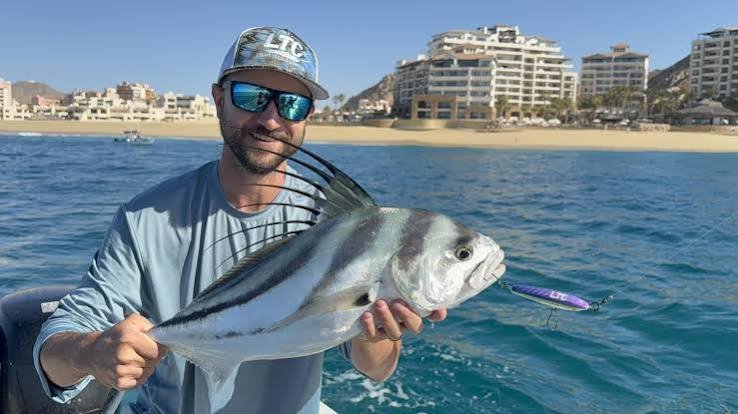
Can you eat roosterfish? Yes, roosterfish is technically edible, and it is occasionally sold fresh or consumed in communities along the eastern Pacific coast. That does not necessarily mean it is the best fish to bring home for dinner.
Roosterfish meat is generally described as dark, firm, strongly flavoured and less delicate than popular table fish such as snapper, grouper, mahi-mahi or corvina. It also has a prominent bloodline that must be removed carefully if you want a cleaner taste.
There is another issue to consider. Roosterfish is one of the most celebrated inshore game fish in Mexico and Central America. Many fishing guides and recreational anglers practise catch and release because the fish is more valuable alive as a sport species than it is as a meal.
The practical answer is simple: you can eat roosterfish if harvesting it is legal, the fish is fresh and it is handled correctly. However, releasing it is often the more responsible choice.
What Is a Roosterfish?
The roosterfish, scientifically known as Nematistius pectoralis, is a large predatory marine fish found in the eastern Pacific Ocean. Its natural range stretches from southern California and Mexico through Central America to Peru and the Galápagos Islands.
It is easy to recognise because of the seven elongated spines on its dorsal fin. When raised, these spines resemble a rooster’s comb, which explains the fish’s common name.
Roosterfish usually inhabit:
- Shallow coastal waters
- Sandy beaches and surf zones
- Rocky shorelines
- River mouths and estuaries
- Areas where baitfish gather
Juvenile roosterfish may even enter tide pools, while mature fish patrol beaches and nearshore reefs in search of sardines, mullet, needlefish and other prey. FishBase notes that the species is harvested locally and marketed fresh in parts of its range, confirming that roosterfish is considered edible rather than poisonous by definition.
Can You Eat Roosterfish Safely?
The answer to can you eat roosterfish safely depends less on the species itself and more on where the fish was caught, how quickly it was chilled and how thoroughly it was cooked.
Roosterfish is not generally listed among the fish that are inherently toxic or universally unsafe to consume. Still, like any wild-caught tropical marine fish, it may carry bacteria, parasites or environmental contaminants if it is mishandled.
Before eating one, confirm that:
- Local fishing regulations allow the fish to be kept
- The fish came from clean, legally accessible water
- It was placed on ice immediately after capture
- The flesh does not smell sour, ammonia-like or unusually strong
- The organs and bloodline are removed properly
- The meat is cooked to a safe internal temperature
The US Food and Drug Administration recommends cooking fin fish to an internal temperature of 145°F or 63°C. Properly cooked flesh should appear opaque and separate easily with a fork.
What Does Roosterfish Taste Like?
Taste is one of the main reasons people ask, can you eat roosterfish and actually enjoy it?
Roosterfish is not typically ranked as a premium food fish. Its flesh is firm and substantial, but it may have a stronger, more mineral-like or “fishy” flavour than white-fleshed species.
Several factors influence the final taste:
- The size and age of the fish
- How quickly it was bled
- Whether the dark bloodline was removed
- Water temperature and location
- Time spent out of refrigeration
- Cooking method
- Marinades, spices and sauces
Fresh, properly handled roosterfish may taste mildly sweet underneath its stronger ocean flavour. Poorly handled meat can become dark, metallic and unpleasant very quickly.
Is Roosterfish Meat White or Dark?
Roosterfish flesh may appear pinkish, greyish or moderately dark compared with snapper or halibut. A thick strip of darker red tissue runs through the fillet.
This tissue is commonly called the bloodline. It contains higher concentrations of blood-rich muscle pigments and oils, which can create a pronounced flavour.
Removing the bloodline does not transform roosterfish into a mild white fish, but it can significantly improve the finished dish.
Is Roosterfish Similar to Jack Crevalle?
Roosterfish is frequently compared with jack crevalle because both are powerful coastal predators with firm, darker meat. However, roosterfish belongs to its own family, Nematistiidae, rather than being a true member of the jack family.
From a cooking perspective, the comparison is still useful. Both fish benefit from immediate bleeding, rapid chilling, bloodline removal and strong seasoning.
Why Roosterfish Is Not Considered a Top Table Fish
Although the answer to can you eat roosterfish is yes, most culinary discussions place it below more desirable species.
Its reputation as a lower-quality food fish comes from several characteristics.
Stronger-Tasting Flesh
The darker muscle tissue can produce a more assertive taste. People who prefer mild cod, flounder or snapper may find roosterfish overpowering.
Large Bloodline
The central bloodline can occupy a noticeable part of each fillet. Leaving it attached may give the meat a metallic, oily or bitter taste.
Texture Can Become Tough
Roosterfish is an athletic predator built for speed and endurance. Its muscular flesh can become chewy when overcooked.
High heat for too long may dry the exterior before the centre is properly cooked. Controlled grilling, pan-searing or slow poaching usually produces a better texture.
Greater Value as a Game Fish
Roosterfish is famous for explosive surface strikes, fast runs and difficult fights. In many fishing destinations, tourists travel specifically to catch one and release it.
Central American fishing operators commonly treat roosterfish as a catch-and-release species because of its sporting and tourism value, even in places where retention may not always be prohibited by national law.
Is It Legal to Keep and Eat Roosterfish?
Fishing laws vary by country, region, season and fishing method. Never assume that a roosterfish may be harvested simply because someone else has kept one in the past.
Before deciding can you eat roosterfish from your catch, check:
- National fisheries regulations
- Local marine-protected-area rules
- Size or bag limits
- Seasonal restrictions
- Charter-boat policies
- Licence requirements
- Mandatory release regulations
- Approved hook and gear rules
Some Costa Rican fishing operators describe roosterfish as a protected catch-and-release species and emphasise the use of circle hooks to reduce injury. Because regulations and enforcement policies can change, anglers should verify the current rules directly with the relevant fisheries authority or licensed local guide before keeping a fish.
A charter captain may also operate under a release-only policy even where limited harvest is technically legal. Respecting that policy protects the fishery and avoids conflict on the boat.
Could Roosterfish Cause Ciguatera Poisoning?
Roosterfish is a tropical predatory fish, so some people worry about ciguatera fish poisoning. Ciguatera occurs when fish accumulate naturally occurring toxins produced within tropical marine food webs.
The condition is more strongly associated with large reef predators such as barracuda, moray eel, grouper and certain snapper species. Roosterfish is not commonly named as a leading ciguatera species in major public-health guidance.
That said, toxin risk can vary by location and local ecology. Public-health authorities recommend following regional seafood advisories and avoiding large predatory reef fish from areas known for ciguatera outbreaks.
Important facts about ciguatoxin include:
- The contaminated fish may look and smell normal
- Cooking does not reliably destroy the toxin
- Freezing does not eliminate it
- Marinating does not make contaminated meat safe
- Larger, older predators may accumulate more toxin
- Risk can differ between nearby fishing locations
Ciguatoxin cannot be detected by casually inspecting the fillet. If local fishermen, health authorities or charter operators warn against consuming predatory fish from a particular area, follow their advice.
Can You Eat Roosterfish Raw?
Eating wild roosterfish raw is not the safest option.
Raw marine fish may carry parasites and disease-causing microorganisms. The Centers for Disease Control and Prevention explains that people who eat raw or undercooked marine fish can be exposed to anisakiasis, a parasitic infection caused by nematode larvae.
What About Roosterfish Ceviche?
Some anglers prepare fresh roosterfish as ceviche because lime, onion, chilli and herbs help balance its firm texture and strong flavour. However, citrus juice changes the appearance and texture of fish without reliably making it microbiologically equivalent to cooked seafood.
The CDC classifies raw or undercooked seafood, including ceviche, as a riskier food choice. Travellers are also advised not to assume that fish marinated in citrus juice or vinegar has been safely cooked.
Pregnant people, older adults, young children and anyone with a weakened immune system should avoid raw roosterfish entirely.
How to Handle Roosterfish After the Catch
If harvesting is legal and you have decided to keep the fish, quality depends on what happens during the first few minutes.
Bleed the Fish Immediately
Bleeding helps remove residual blood that may otherwise intensify the flavour.
Use a clean, sharp knife to cut the gill arches or sever the main blood vessels behind the gills. Place the fish in clean seawater briefly while it bleeds, then transfer it to ice.
Follow local humane-dispatch and fish-handling practices.
Chill It Quickly
Roosterfish should not remain on a hot deck or beach. Warm tropical conditions allow bacterial growth and flesh deterioration to accelerate.
Use a large insulated cooler with plenty of ice. Ideally, surround the entire fish with an ice-and-water slurry so its core temperature drops rapidly.
Clean the Fish Carefully
Remove the gills and internal organs without puncturing the digestive tract. Rinse the body cavity with clean potable water rather than harbour water or contaminated shoreline water.
Keep knives, cutting boards and hands clean to avoid cross-contamination.
Remove the Skin and Bloodline
After filleting, trim away:
- Dark red central muscle
- Bruised tissue
- Excess fat
- Skin
- Remaining bones
- Discoloured edges
One traditional preparation guide recommends making angled cuts along both sides of the bloodline and removing it in a V-shaped strip. This technique leaves a cleaner-tasting portion of meat.
How to Cook Roosterfish for the Best Results
Knowing can you eat roosterfish is only half the answer. The cooking method determines whether the meat becomes enjoyable or tough.
Roosterfish responds best to recipes that add moisture, acidity and bold seasoning.
Grilled Roosterfish
Grilling works well with thick, evenly cut portions.
Marinate the fish for 20 to 30 minutes in:
- Olive oil
- Lime or lemon juice
- Crushed garlic
- Paprika
- Black pepper
- Coriander or cilantro
- A small amount of salt
Cook over a clean, lightly oiled grill. Turn the fillet only once if possible, and remove it when the centre reaches 145°F or 63°C.
Do not leave it over intense heat after it becomes opaque. Overcooked roosterfish can become dense and dry.
Pan-Seared Roosterfish
Pan-searing creates a browned surface while preserving moisture inside.
Pat the portions dry, season them and place them in a hot pan with a thin layer of oil. Sear the first side until golden, turn the fillet and lower the heat to finish cooking gently.
A spoonful of butter, garlic and lime added near the end can soften the stronger flavour.
Roosterfish Tacos
Fish tacos may be one of the most forgiving ways to serve roosterfish.
Cut the cleaned fillet into small strips and season it with cumin, smoked paprika, garlic and lime. Grill or pan-cook the pieces, then serve them in warm tortillas with cabbage, salsa and a creamy citrus sauce.
The crunchy vegetables and bright toppings balance the dense meat.
Roosterfish Fish Cakes
Fish cakes are useful when the cooked fillet has a strong flavour or slightly firm texture.
Flake the meat and combine it with:
- Mashed potato
- Egg
- Chopped herbs
- Breadcrumbs
- Mustard
- Lemon zest
- Finely diced onion
Form small patties and cook them until browned and hot throughout.
Smoked Roosterfish
The firm flesh can tolerate hot smoking, particularly after brining. A short brine containing salt, sugar and spices adds moisture and moderates the flavour.
Smoke the portions until fully cooked rather than treating them as cold-smoked, ready-to-eat fish.
Simple Roosterfish Recipe
This basic recipe works best with a freshly caught, thoroughly trimmed fillet.
Garlic-Lime Pan-Seared Roosterfish
Ingredients
- 4 cleaned roosterfish portions
- 2 tablespoons olive oil
- 2 cloves garlic, finely chopped
- Juice of one lime
- 1 teaspoon smoked paprika
- ½ teaspoon ground cumin
- Salt and black pepper
- Fresh cilantro
- Lime wedges for serving
Method
- Inspect the fillets and remove all dark bloodline tissue.
- Pat the portions dry with clean paper towels.
- Combine the olive oil, garlic, lime juice, paprika and cumin.
- Coat the fish lightly and marinate it in the refrigerator for 20 minutes.
- Heat a heavy pan over medium-high heat.
- Sear the fish on one side until browned.
- Turn it once, reduce the heat and cook until the centre reaches 145°F or 63°C.
- Rest briefly, then serve with cilantro and fresh lime.
Avoid reusing marinade that has touched raw fish unless it is boiled first.
Is Roosterfish Healthy?
There is limited widely published nutritional data specifically for roosterfish, so exact calorie, protein, fat and mercury values should not be invented or assumed.
As a marine fin fish, its flesh is likely to provide protein and a range of nutrients normally found in seafood. However, its precise nutritional composition may vary with age, diet, season and capture location.
Potential considerations include:
- High-quality dietary protein
- Naturally occurring marine fats
- Selenium and other minerals
- Possible mercury or contaminant exposure
- Sodium added during brining or seasoning
- Foodborne risk when eaten raw
People who are pregnant, breastfeeding, feeding small children or limiting mercury exposure should seek location-specific seafood guidance rather than treating roosterfish as interchangeable with well-studied commercial species.
Should You Eat or Release a Roosterfish?
The most responsible answer to can you eat roosterfish often depends on circumstances rather than appetite.
Keeping one may be reasonable when:
- Harvest is explicitly legal
- The fish is within the permitted size and bag limit
- Local experts consider it safe to consume
- The fish was badly injured and unlikely to survive
- It can be chilled immediately
- The entire usable catch will be eaten
Release is usually preferable when:
- The fish is healthy
- Local guides follow catch-and-release practices
- Regulations require release
- You are unsure of the law
- Proper refrigeration is unavailable
- Local toxin advisories exist
- You already have enough food
- You caught a large breeding-size fish
Roosterfish populations support guiding businesses, coastal tourism and recreational fishing. A released fish may be caught again and continue contributing to the local ecosystem.
How to Release Roosterfish Properly
A poorly handled release can still kill the fish. Minimise exhaustion and physical damage.
Follow these best practices:
- Use tackle strong enough to shorten the fight
- Prefer circle hooks when fishing with bait
- Keep the fish in the water whenever possible
- Wet your hands before touching it
- Support the body horizontally
- Never hold it only by the jaw or gills
- Avoid placing it on hot, dry sand
- Remove hooks quickly
- Cut the leader if a hook is deeply embedded
- Revive the fish facing into clean, moving water
- Release it only when it can swim strongly
Photographs should be prepared in advance. A short, controlled lift is much safer than repeatedly posing with the fish.
Common Mistakes to Avoid
Even experienced anglers can ruin the meat or endanger themselves through poor handling.
Avoid these errors:
- Keeping a fish without checking regulations
- Leaving the catch in direct sunlight
- Using too little ice
- Failing to bleed the fish
- Leaving the bloodline in the fillet
- Assuming lime juice kills every parasite
- Eating meat with an abnormal odour
- Cooking by colour alone
- Consuming organs from a large tropical predator
- Ignoring local seafood warnings
- Keeping a trophy fish only for photographs
When there is uncertainty about legality, freshness or toxin risk, do not eat the fish.
Frequently Asked Questions
Can you eat roosterfish caught in Costa Rica?
You should not keep a roosterfish in Costa Rica unless current regulations and your licensed operator clearly permit it. Many Costa Rican fishing businesses treat roosterfish as a protected or release-only game species. Confirm the rule with the appropriate fisheries authority and your captain before fishing rather than making the decision after landing the fish.
Does roosterfish taste good?
Roosterfish can be edible, but opinions about its taste are mixed. The flesh is firm and stronger than snapper, grouper or mahi-mahi. Immediate bleeding, rapid icing and complete removal of the dark bloodline can improve it considerably.
Can you make ceviche from roosterfish?
Roosterfish is sometimes used in ceviche, but citrus juice does not provide the same protection as proper cooking. Raw marine fish may contain bacteria or parasites, so fully cooked roosterfish is the safer choice. High-risk individuals should avoid raw or citrus-marinated seafood.
Does roosterfish contain mercury?
Species-specific mercury data for roosterfish is not widely available in standard consumer seafood guides. Because it is a predatory marine fish, contamination may vary according to size and location. Follow regional advisories and avoid frequent consumption when reliable testing information is unavailable.
What is the best way to cook roosterfish?
Grilling, pan-searing, fish tacos and fish cakes are practical options. Remove the bloodline, use acidic or strongly seasoned marinades and avoid overcooking. For food safety, cook the thickest section to 145°F or 63°C.
Final Verdict: Can You Eat Roosterfish?
So, can you eat roosterfish? Yes. It is an edible marine fish, and its meat may be grilled, seared, smoked or used in tacos when the catch is legal, fresh and properly prepared.
Still, edible does not automatically mean desirable. Roosterfish has darker, stronger-tasting flesh, requires careful trimming and carries far greater value as a living sport fish in many coastal communities.
Before keeping one, check the law, consult a trusted local guide and consider whether another available species would make a better meal. When the roosterfish is healthy and release is permitted, handle it gently, take a quick photograph and return it to the water.
